Showing posts with label Events (44 posts). Show all posts

February 1, 2012

Real Valley Stories: The Unfinished Booth

Real Valley Stories: The Unfinished Booth

Editor's Note: Part 6 in an irregular series of stories from my 13 years in Silicon Valley. Part 5 talked about the tradeoffs of speed, quality and budgeting. This time, a would-be trade show nightmare.

For the first few years in my Marketing career, I spent virtually all my time behind the desk. Relationships were largely through e-mail or by phone, or vendors could come to our office for the occasional pitch, onsite meeting, or creative review. At one point, I must have not left California for as much as a decade, be it for vacation, trade show, or any other reason. That all changed in 2004, when with the sudden departure of a colleague who had to date held the role of events manager, the luck of running the entire experience fell to me - from pre-show promotion to materials transport, handling and setup to lead collection and pipeline tracking.

That summer posed the first real challenge with the arrival of the Siggraph trade show in Los Angeles. Our company, well before I had taken over the role, had selected an exhibit space of 400 square feet, with a standard 20 foot by 20 foot configuration. We had customized our booth after buying it from a company that had once seen better days. The previous events manager had kept the procedures around trade show planning an undocumented secret, so I set out weeks in advance to make sure we booked and shipped everything to Southern California in time for the important show.

A month or so ahead of Siggraph, the operations manager and I visited the warehouse to see the booth materials for ourselves. But the boxes containing the booth and its pieces were stacked high above us. Between us both, we selected the boxes we were sure contained all the walls, poles and signage needed, and were good to go - all without demanding the warehouse owners took them down by forklift to be further examined. As far as we knew, that was true. But come the day before show start, I quickly learned different.

As most trade show veterans know, the day (or multiple days) before an event starts, event planners and experienced union workers band together to assemble trade show booths, from unrolling carpeting and laying electrical, to propping up signage and setting up the welcome area. This time, as the crew came to get started on my booth, they examined the instructions, glanced at the boxes we had brought, and quickly determined it wasn't all there. They gestured to me, we looked two or three more times, and it was obvious we had basically shipped half a booth, and the rest of the booth was in boxes hundreds of miles north, in the Bay Area.

Not a good thing, considering securing space at the trade show was tens of thousands of dollars, and revenue from the show should be much higher. So I called another colleague back at headquarters, who zipped back to the warehouse to find the missing pieces, and had them put on a truck immediately, to begin driving south toward Los Angeles. The boxes, in time, would find us, and somehow we would get it done. So the union team and I caught up and decided they would go work on other booths until our equipment came.

The morning turned to afternoon. Afternoon turned to evening. No good news. The only update was from the driver of the truck, who called to say he had hit traffic from an accident on I-5, which would make him hours later. The union team, meanwhile, called me, and said they had completed all other work, and that we were now on the clock, with or without our booth. I couldn't disagree.

Around 11 p.m. the night before the show, with doors opening at 8 the following morning, the truck containing the missing boxes with our missing pieces arrived at the convention center. Our small team of union workers and I worked around since-locked doors and the array of quietly finished booths to get started. They were now on overtime pay, obviously, and probably on double overtime.

As the booth started to take shape, around 1 a.m. there was more discussion and commotion and clear confusion among the team - as they couldn't find the largest piece of the entire booth, a vertical pole which supported a top branding sign and the right wing of the booth itself. It was nowhere to be found. At this point, I just said to continue and do all they could. By 2 a.m., approaching 2:30, the booth looked like a booth, only without our brand name at the top. Instead, it just said "Network Storage", which confused attendees to no end in the days ahead.

Thanking each of the workers, and giving them each an equal share of all the cash I had personally pulled out of my own money from the ATM, I considered the night done, and wrapped up just five hours before we were supposed to open. One of the men, not wanting me to walk back to my hotel that late at night, gave me a lift home.

The following morning, I was at our booth in uniform ready to greet customers, to the odd stares of those neighboring booths who had finished their setup days with our area being a blank square of carpet. More than one person came by to ask what had happened as our booth had seriously popped up overnight. Later that afternoon, a man came by and interrupted me saying that he had found the missing long pole that belonged with our booth, in the back of his truck, wrapped in carpeting, and that in all the haste to get down the state, and to unload, he had overlooked it. The following question was, "Do you want to put the rest of the booth up overnight tonight?"

I thought about it for a brief second, and said no. One night was enough. Somehow, we finished the event in fair shape, though it was not perfect, and somehow, I didn't see any ill effects of the incident in my job. But it was something I didn't want to experience again - a perfect example of needing to be fully prepared and adequately making sure that no one person, especially one eager to leave the company, has all the information you need to succeed. And that's a real story.

August 5, 2011

Bring Chromebook to Events, Ditch Power Cords

Bring Chromebook to Events, Ditch Power Cords


Sitting here at the Teens In Tech Conference as the lunch break winds down, I see white power cords everywhere, as the vast majority of attendees brought their Macs and the signature white power cords are snaking down to the ground go grab much-needed electricity for the full day event, which wraps at 5 pm. There are a handful of Ubuntu laptops and the random Windows machine here and there, but it's mostly Macs.

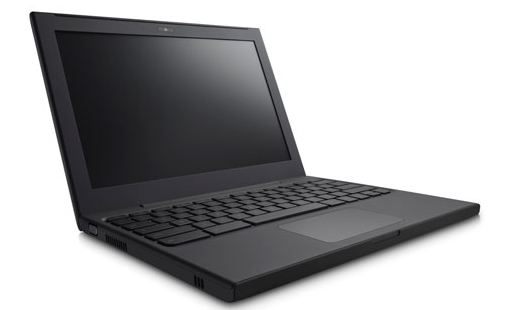
That said, I didn't bring power cords. The reason is because I brought the Chromebook, and if you've gotten used to a world where you have to constantly feel the anxiety of watching your battery to see how many hours/minutes you have left and what percentage you are charged, the elimination of that anxiety is serious relief.

+Matt Cutts is taking a 30-day challenge to only use his Chromebook, to the exclusion of all other laptops. I've already talked a lot about how I made the Samsung Chromebook my primary computer, and it's true. I still get my MacBook Air out every once in a while for Photoshop work, but that's happening less and less these days, as more of our content moves to the Web.

All I really need from my computer now is amazing battery life and always-on connectivity, and ChromeOS does exactly that. We're very new in this process, of course, so while there may be some shortcomings, think about the trajectory of both Android and iOS, and how those platforms are a lot more feature-rich and full of apps versus just a few years ago.

You know that feeling you get when you switch to an unfamiliar platform, and aren't comfortable knowing where things are or how shortcuts work? Do you know how you feel more comfortable in your space on your main machine in your favorite OS? It's like speaking English (or your native tongue) after the stress of being in a foreign language. Ditching the power cords and being fully on the Web gives me that same relief and it's energizing to know I'm not tethered, but instead, fully mobile. So if you have access to Chrome, bring it to your next event and feel the difference.


/via My Google+ Profile.

July 15, 2011

Teens in Tech's Inaugural Incubator Companies Revealed

Teens in Tech's Inaugural Incubator Companies Revealed

Only a few weeks away from the August 5th Teens In Tech Conference at Xerox PARC, in partnership with Meshin, a half-dozen companies founded and run by teens are preparing their sites and products for unveiling in what should be a fun Demo Day. The companies themselves were revealed earlier this week, providing a sneak preview of what you can expect should you attend. While not on the scale of Y! Combinator or 500 Startups, what the teams lack in number, they make up for in spirit and a lack of inhibition. They do believe they can accomplish anything they set their minds to, and with some aid from the more seasoned of us who can help provide some mentorship, the teams are converting their projects from whiteboards and ideas to shipping and availability for the public.

While you will hear more about each of the companies face to face at the conference, and in follow-on press, a quick summary of the participating teams is below:
  • Bubbls, founded by a team from Palo Alto, is a new social mobile application that taps into geolocation and lets your friends know when you are available to hang out.
  • BuyNomial, based in Oakland, is a new site that helps youth set savings goals through creating a wish list of products and working to budget wisely.

  • CM Studios, from Atherton, is creating a fun new game for iOS and soon Android, involving zombies.

  • Codulous, founded by a group from Santa Cruz, is a smart Web-based code editor that lets engineers work in the cloud, and synchronizes to multiple devices, including desktops, for remote access.

  • MySchoolHelp, the most remote applicant, based in White Plains, New York, but spending the summer in the Bay Area for the purpose of participating in the Teens in Tech incubator, is setting up a collaborative site for high schoolers to share class notes and get rewarded for high quality work.

  • Workcrib, from Walnut Creek, is working to provide an easy way to showcase workspaces online.
There are some obvious themes in this year's participants, the inaugural class of companies - as some are leveraging the fast growth in mobile and social, while others are tapping into the cloud for improved sharing and collaboration. The activity I've seen face to face with many of the teams in recent weeks has been quite impressive, and they can lap me in the geek front, which is a good thing indeed.

All will be presenting at the August 5th conference at PARC. As noted Monday, I have a discount code I hope you can leverage. Sign up at http://2011teensintech.eventbrite.com/.


Disclosure: I am an unpaid advisor to Teens in Tech, and have a small equity stake in the company.

July 11, 2011

Teens in Tech Conference: August 5th at PARC

Teens in Tech Conference: August 5th at PARC

This summer, I've spent a good amount of time working with teen entrepreneurs working on their brand new projects and companies as part of Teens In Tech's new incubator initiative, aimed to help these young entrepreneurs focus and deliver on their ideas. The culminating point of the summer will be this August 5th, when all of the companies are unveiled at a special Demo Day as part of the 2011 conference, held at the historic Palo Alto Research Center, also featuring top tier speakers from the world of Web services, venture capital and tech.

When I joined the advisory board to Teens In Tech more than two years ago, I did so with the intent of helping young innovators get access to the resources they need to convert their concepts to reality. In addition to the Teens In Tech blog, which has seen increased activity of late, team-ups with TEDxYouth on the East Coast, and the annual conference, launching this summer's incubator has been very rewarding. I've sat in on strategy sessions as the teens work together to find the best way to outline their product, tweaked Google AdWords campaigns, redesigned email copy, and all the blocking and tackling necessary as companies mature. This year's conference is the biggest one yet, and unveiling the incubated companies is going to be a big win - not just for those going live, but those attending.

Daniel Brusilovsky, CEO and founder of Teens in Tech, has rounded up some A-list sponsors, including GM, Microsoft, Eventbrite, RadTech, Vapur, Meshin and others. Speakers include Andrew Hsu, founder of Airy Labs, Daniela Lapidous, founder of SmartPowerEd, Joey Primiani of Cortex, Michael Simmons, cofounder of Flexibits, and more solid presenters that share the same vision I do, of helping Teens take their tech plans to the next level.

Being an advisor to Teens in Tech has its privileges. I'll be at the conference, but I also snagged discount tickets at 25% off list. I hope you'll join us August 5th. Sign up at http://2011teensintech.eventbrite.com/.

Disclosure: I am an unpaid advisor to Teens in Tech, and have a small equity stake in the company.

May 25, 2011

Teens In Tech Announces 2011 Conference, Incubator

Teens In Tech Announces 2011 Conference, Incubator


As you know, one of the companies where I sit on the board of advisors is Teens In Tech, the youth geek oriented startup founded by Daniel Brusilovsky. The company has seen some changes in the two years since I partnered up with Daniel and the rest of the team, but the mission remains the same, to bring value to teens looking to get support through community, peer networking and industry advisory. Today, Teens In Tech is announcing their 2011 conference, scheduled for August 5th in Palo Alto. This comes on the heels of the launch of the company's Incubator program, which will help cultivate some exciting startups born from the minds of the next generation.

In the mold of Y! Combinator, TechStars and 500 Startups, the eight-week Incubator program kicks off on June 20th at Appcelerator in Mountain View. Five teams have been selected to participate, who you will no doubt hear about next month and beyond.

On August 5th, participants in the incubator will present as part of a Demo Day at the historically renowned Xerox PARC campus in Palo Alto, alongside this year's conference - which should be a highlight of the event. In addition, the event will feature speakers from Mozilla, Eventbrite, Audrey Capital, Flexibits, Cortex and others. Should be a great day to invigorate teens who are pushing to enter the fast-moving world of startups.

If you want to attend or know somebody who should, we'd love to have you there. Early bird tickets are available for $30 with tickets closer to the time of the event going at $40.

May 11, 2011

Google Displays Big Numbers at GoogleIO. Is It Better?

Google Displays Big Numbers at GoogleIO. Is It Better?

The first day of Google I/O 2011 was focused on Android. For Google, focusing on Android and the mobile OS' growth is a real point of strength, with incredible numbers and increased velocity. But there are still open questions as to demonstrable quality leadership that would have people on the other side of the aisle drooling with jealousy.

Hugo Barra, director of product management for Android at Google, highlighted growth of Android from the first T-Mobile G-1, shipped 2 1/2 years ago to 100 million Android activations through 2011. Other statistics similarly portray a story of wide reach and penetration in practically every regard: 36 OEMs, 215 carriers, more than 450 thousand Android Developers, feeding 310 Android devices in 112 different countries. The 100 thousand activations per day highlighted in last year's session was doubled three months later, and doubled a second time, to more than 400 thousand daily now. Total software application installations have accelerated with the first billion installs taking two years, and most recently, only 60 days, with 4.5 billion installs to date.

With Google being a data driven company, there's no question they love their numbers, and these are good ones. But there's no doubt a sizable market who perceives the OS and the companion apps and hardware as being of lower quality versus competitors like Apple, or even HP and Microsoft. Barra stated, "The quality of apps is amazing," adding "The world's most engaging, useful and entertaining applications are running on Android."

Accompanying his comments was a laundry list of brand name apps that have come to be featured in Android Market, many of whom who started on iOS first, and have moved to Android, from Major League Baseball to Pulse and many top game titles. With that kind of intro, no doubt many of us were excited to hear what was to come next in Android, especially as we were caught up on improvements to Honeycomb 3.1 and the new Ice Cream Sandwich. But for the most part, the updates seemed very simple, leading off with enhanced widgets, and enabling devices to act as USB hosts. Ice Cream Sandwich was promised as bringing the best of Honeycomb to phones and tablets, but the response to Honeycomb so far, especially in its limited release so far on the Motorola Xoom has been lukewarm.

As was mentioned to me in a discussion with a small group of Google geeks, in a conference focused on developers, one shouldn't always anticipate the delivery of retail-capable products for end users. So while all the 5,500+ attendees (myself included) were no doubt excited to test and receive the new 10 inch Samsung Galaxy Tab ahead of its availability on the open market, much of the highlights were focused on technologies that looked futuristic in nature, with midlevel applicability to today's array of products.

The much-anticipated arrival of Google Music and movie rentals on the Android Market are definitely improvements for all Google-centric users looking to wean themselves off iTunes, but they do seem like they are playing the role of catch-up to both Apple and Netflix, who have significant headstarts and market visibility. It's obvious the music labels are so full of themselves as to be causing headaches for Google, Apple, Amazon and Spotify, but it'd be great to see Google leading the way on some of these spaces instead of filling holes in their lineup against Apple.

Don't get me too wrong. Google's software sounds very good, with fun demos of smart machine-learning driven mixes (comparable to that of iTunes), and wireless synching, where Apple lags behind. But if you're going to take on the established player in the market in the place where they are strong, it isn't just enough to play feature matching, you must catapult way beyond their offering, as Spotify did for me to iTunes, getting me out of that model entirely.

What I've seen happen in the last two years or so is that lines are being drawn between those who prefer one platform and those another. It's a rare person who gets the chance to try both platforms and come away with a full understanding of one's weakness and another's strengths. Instead, most are digging in with both feet and becoming defensive if their point of view is questioned. If Android wants to truly be perceived as the market leader, not just in quantity, but quality, it's got some more room to grow, to demonstrate highest quality tablet experience, app experience, universal application across devices, and feature leadership - because the other team has the branding and personal experience nailed, great numbers or not.

May 9, 2011

Google I/O 2011: Android and Chrome OS All the Time

Google I/O 2011: Android and Chrome OS All the Time


This week, Google is holding their annual developers conference on Tuesday and Wednesday in San Francisco. The event has grown in stature over the last few years, rivaling only MacWorld (back when Steve Jobs would keynote) in anticipation as press, users and evangelists banter back and forth about will or won't be announced at the event. For the second year in a row, I'll be there, after what was no doubt one of the more enjoyable technology events for me last year. But instead of going in expecting whiz-bang products and breath-taking surprises, I am expecting to hear strong updates on the company's continued march in hardware operating systems, both mobile and desktop, taking the company even further away from their initial core focus on search and accompanying ads, but not so extreme as to having us scratching our heads and demanding to find a use case.

Like the aforementioned Apple, Google already does a solid enough job year-round, between its biggest events, of keeping people updated. The Nexus One was announced at a special media event, as was the Honeycomb tablet OS. Google Buzz got its own event, all at the company's Mountain View headquarters where the venue was more comfortable, the expectations were maybe more muted, and the numbers were certainly smaller. But I/O is the crown jewel of conferences for the search and ads giant - a place to update its extended community of geeks on progress to date, while simultaneously encouraging them to help push their next initiatives forward, keeping their attention close while so many temptations lurk elsewhere.


The Sessions and Pods Heavy on Android & Chrome, Light on Social


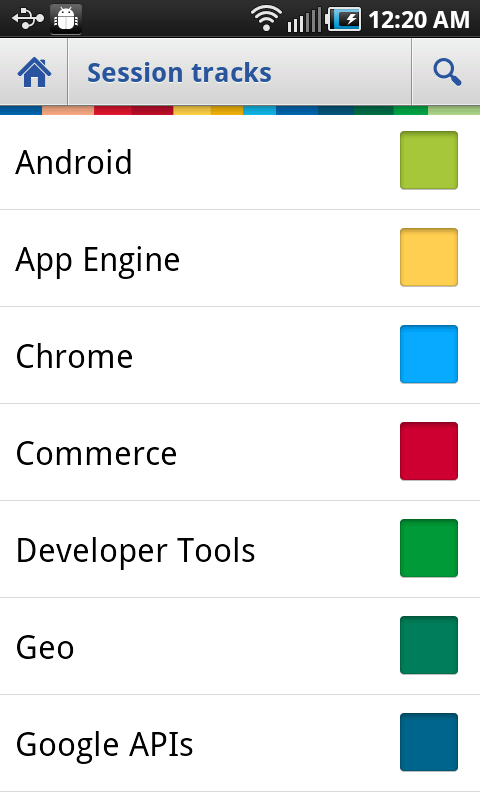
If the Google I/O application for Android is any indication of the week's focus, there are dedicated tracks for the company's two-pronged approach to take share in mobile and desktop OS's - Android and Chrome, flanked by items deeper in the weeds, like App Engine, Commerce, Geo, Developer Tools, APIs, Tech Talk and Google Apps.


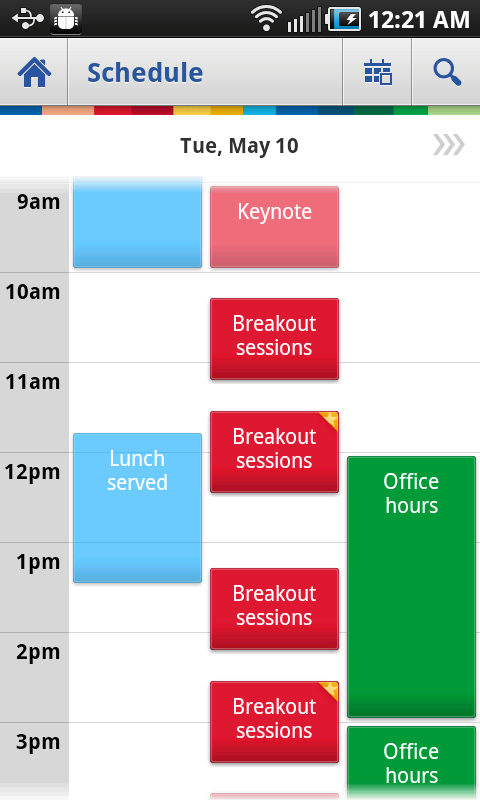
Tuesday's Schedule and My Tentative Attendance


The 2010 tracks make one either cringe or wax nostalgic with scads of updates on Google Wave, dedicated meetings to discuss Google Buzz APIs, and an entire track on the Social Web, from PubSubHubbub, Open and Social Web, OpenSocial, and the integration of Google Buzz with location and social gaming. Not in 2011. There's no Social Web track at all. Other sites have predicted what that means for the future of Google Social, but what it does mean is that one should plan on talking about something else outside of the two-part keynotes Tuesday and Wednesday.


Google I/O 2010 was the flashpoint in my transition from iPhone to Android, after the latter OS had just been a curiosity to me. I've extended this Mountain View infiltration into my life with the addition of the Chrome OS powered CR-48, and spend a ton of time with my Samsung Galaxy Tab and Barnes and Noble NOOKColor, both of which run Android. In the fall of 2010, as I joined my6sense, we launched on Android, and have leveraged the Android ecosystem to find partners. 2011 looks like it should provide updates on Android helpful to both developers and users, and it may possibly be the starting point for getting Chrome OS equipment to the masses, beyond the initial beta units that I and others like me have been lugging around.

The combination of Android and Chrome OS should be enough for the event. No doubt we'll hear more about numbers, partnerships, coding, development, standards, openness and what have you. We may get more demos of music, but no announcements. We may see updates on the Android Market and Chrome Web Store, but they're ancillary to the main attractions one and two. No swing for the fences surprises, but straight up execution where the company knows its strengths and won't likely be second guessed. That can be saved for a special event when the time is right.

August 19, 2010

Real-Time News Needs to Reward Authenticity, Curation

Real-Time News Needs to Reward Authenticity, Curation

At the Search Engine Strategies San Francisco event Wednesday, Echo's Khris Loux sat down with me and representatives from UltraKnowledge, CBS Interactive (formerly CNET) and CNN.com to discuss the rise of citizen journalism and social media, intertwined with traditional journalism, and how mainstream media outlets can adapt their practices to include curation as part of their offerings. Our panel's determination could be summarized as saying the ability for the public to launch stories and extend storylines related to realtime has removed the ability for mainstream media to be gatekeepers, furthering the need to accurately determine authenticity and truth. And where mainstream media cannot have exceptional access, be it to geography, sources or timing, part of their new role is to discover and highlight high quality content, regardless of its source, in effect, adopting the role of curator.

Best exemplified by CNN.com's iReport, citizen journalists are being given a chance to report on equal footing with the mainstream media. While iReport gives these would-be reporters a place to piggyback on a major brand, many others have taken to their own blogs, social networks or Twitter to report live, and unlike the traditional approach where media authors would issue a story and call it a day, the life of a story now often starts when it hits the Web, spawning comments, shares and retweets. But as citizen journalists and bloggers are given the same capability to gain visibility, mainstream media's much-celebrated structure to put articles and stories through the vetting process sometimes falls astray in the race to get the story out quickly.

CNN's iReport Has "Vetted" about 5% of all Submissions Today

All time, about 7% of all Submissions are "Vetted".

A little over two years ago, I highlighted how quickly incorrect news can spread in the age of microblogging. (See: Smart People, Stupid Tweets. Fake News Spreads Fast on Twitter.) While many of us know not to believe everything on the Web, even if it is in Wikipedia, there remains a need to separate fact from fiction. With so many publications out there reporting on the same information at the same time, without having additional insight, the task of curating the very best of the analysis and repeaters can become a very serious task.

In January, I broached this issue, asking, "Can You Filter for Quality News Amidst Instant Analysis?" and earlier still, in December, highlighting how some news organizations are in fact incentivized for behavior which may lead away from taking the extra effort sometimes required to get the story right. (See: Growing Grumblings on Tech News Don't Address Incentives)

As excited and promotional as I am about the ability for anyone to create and share content, I am equally worried that incentives to promote the discovery of accuracy are not clearly defined, and it is often very difficult to find a real authority on a given topic in a world of instant analysis. When a story breaks in a real-time platform, like Twitter, the person who first reported the earthquake, or was present on the scene of an event, is only an expert for a short time, and when that topic has faded, new influencers for new stories are needed. This leads to a need for trusted sources to harness the truth from the originator of news, wherever it may be, mass media or citizen journalism, and rapidly verify accuracy.

But the sheer volume of feedback can overwhelm even the most well-intended. CNN.com reported one recent popular article achieved more than 30,000 comments - a practical impossibility to moderate by humans, leading to the desire to somehow separate the wheat from the chaff and surface the most accurate and supported insight. As one knows, trusting the community is possible, but usually results in an across the board maligning of those who share opposing views. See any political blog or sports blog for this particular variety of trench warfare. See any comment stream on Yahoo! News or on YouTube to see the quality of the masses at work.

The answer lies in finding a way to reward the truth-seekers in the real-time Web, and to reward media, be they an established brand or an emerging one, for discovering accurate insights, or simply harnessing them. The world of real-time storytelling is evolving before our eyes, and in some cases, its sheer ephemeral nature promises to introduce as many issues as it solves. We, as readers, creators and sharers, should be working diligently to keep our streams clean and provide value to all those who come in contact with our content.

For more thoughts, see Echo's essay: Real-time Storytelling

January 8, 2010

The CES News River Sends Gadget Blogs Into Overdrive

The CES News River Sends Gadget Blogs Into Overdrive


Google Reader Volume Spikes During CES

Watching the trends in technology news publications is a lot like watching the seasons. It's fairly predictable, and has its ebb and flow. The more sites and stories you read, the greater the value, and the more "liquid" the pace seems to be, as spikes and valleys are smoothed. But no more evident is the acceleration clear from one week to the next as the week of CES, the Consumer Electronics Show, following the hangover doldrums of a post-Christmas holiday. The glut of news from this week, with CES kicking off in Las Vegas, not to mention Google's Nexus One announcement earlier on Tuesday, has most prominently put gadget blogs Engadget and Gizmodo into hyper mode, with many other tech outlets looking to draft behind their lead.

While this is not a huge surprise that both blogs are stepping on the accelerator for this event, the data shows just how much more.

In the last few months, it has not been uncommon for me to scan about 1,000 articles a day in Google Reader - skipping most, sharing a few, and reading others in full. Giving 10 seconds to each story means about 3 hours a day, and 5 seconds a story makes the time needed about 90 minutes.

In the lead-up to Christmas, and the week afterward, my usual forays into Google Reader, as well as FriendFeed and Twitter, were significantly lightened, with news at near standstill, saw fewer items at a pass, totaling about 700 items a day, and half that on the holidays themselves, or on weekends, scraping just over 200. Quiet indeed.


Engadget's Coverage Skyrockets During CES Week


But in the last two days, by themselves, Gizmodo and Engadget have delivered well more than 200 posts per day. While Engadget delivers an already-aggressive 40-50 stories on a given workday, the CES waterfall has pushed them to triple or quadruple output, with about 150 new stories flowing. (Keep in mind they are the official blog of CES, so many stories are no doubt prepared in advance.) Meanwhile, Gizmodo, no slouch at about 70 items a day per usual, is keeping apace with just under 150 items a day. This acceleration with both sites, as well as the padding from traditional tech networks that are also following CES, has pushed my aggregate workload to about 1,300 items a day, double the holiday rate, and 25% ahead of normal.


Gizmodo Doubles Down Efforts for CES

There are other ebbs and flows you can count on from the tech Web. You can always expect spikes around Macworld and other Apple events, and you can expect drops on US-only holidays like Memorial Day and the Fourth of July. But there's nothing like CES for pushing the sheer volume of coverage up to a new level. The coordination required by an editorial team at Engadget and Gizmodo on the week of CES is sure to be intricate, and is something to be impressed with indeed.

Of Note: Chris Saad recommends checking out CNET's CES River as well for CES News and updates.

January 5, 2010

December 28, 2009

2009 Internal Year In Review (Month by Month)

2009 Internal Year In Review (Month by Month)

At the end of 2008, I posted an internal year in review, month by month, which wasn't just a look at the world through louisgray.com lenses, but also at the Web at large, seeing companies debut and change through the year. As you can imagine, what seemed important at the end of the year varied a great deal from that catching my eye at the beginning of the year. Similarly, the issue is no doubt true for 2009 - year that saw a lot less, at least for me, in terms of new startups, and instead, a lot more concern and issues with the economy. As mentioned in last week's roundup of new Web services that debuted in the year, many new products were extensions to others, or leveraged existing platforms.

That's a message you can see through the site's activity... below. Last year's big word was "launched". I dare say this year's word was "Twitter".

January

In what proved to be a prophetic (or ironic) post, I advised FriendFeed on what they should do to gain market share... and said why I talk to companies via the blog... Twitter OAuth slipped... Mike Fruchter penned an epic post on getting started in social media... non real-time Web got me down... Steve Jobs took sick leave... the recession started impacting ads... TweetDeck got funded... but Twitter kept screwing up... scammers joined Facebook... Twitter was funded... and BuzzGain launched.

February

FriendFeed tapped their database with advanced search capabilities... and I visited Lijit in Boulder, Colorado... seeing Gnip as well... Sirius Radio tried to die... and Outbrain was funded... Facebook ads remained off-topic... while I started playing iShoot on the iPhone... while wondering what companies would get us out of the recession... Trendrr launched... we debated Twitter's utility for following people... embraced Google Translate... talked about the cloud and SocialToo blocked automated direct messages.

March

I attended SXSW in Austin, and future Twitter screenshots were leaked... Likaholix launched... I said you should stand for something... while Twitter spammers got creative... Kosmix launched MeeHive... Google Reader added comments... the iPhone gained Facebook Connect... I talked about how to blog live events... CloudContacts launched... as did DoodleJump and FeedBlitz RSS... the recession highlighted a downward spiral and Britney Spears passed President Obama on Twitter. Although mocked at the time for the post, it was a key "tell" in the trend that saw Ashton Kutcher, Ellen and Oprah become top names over the geeks.

April

Twitter ticked me off again... ReadBurner launched BurnURL... while FriendFeed went real-time... Shyftr filtered RSS feeds... I rode a Segway at TechCrunch... Twazzup challenged Twitter Search... Tweetie for Mac was released... I said to stretch me thinner as trade show attendance cratered... Lunch.com debuted... and more Twitter screenshots were leaked.

May

Adobe didn't want me as a customer... saying they were expensive... Microsoft said search could be improved... I debated the intersection of skill and luck for job hunters... Socialmedian integrated into XING... the mob yelled at Twitter... I gave up on Apple rumors... discussed social media data flow and being an early adopter... Twitter's search engine broke down... Flickchart launched... as did Qajack, Topsy, and PeopleBrowsr... and blogging and RSS "seemed slow"...

June

Google introduced an improved blog search... Drew Olanoff got cancer... I bought Robert Scoble's BMW... Palm and Bing managed not to suck... I was on SocialWeb TV... BackType launched BackTweets... FriendFeed spiked my RSS stats... I subscribed to Sirius Radio... Matthew and Sarah turned one year old... as I visited TiVo and highlighted the importance of blogging.

July

FriendFeed added real-time search... retweeting started to trump linking... TweetDeck turned one... Google announced Chrome OS... Lazyfeed launched... as did Echo and Seesmic Web... I discussed beta processes and being a VC in text form... Pubsubhubbub launched... I drooled over the potential of the CrunchPad... and my6sense debuted.

August

I was curious about Apple's plans beyond Mac OS X... noted RSS Feed readers giving way to Google Reader... suggested not to unfollow everyone on Twitter... held a Lunch 2.0 panel with Kosmix, Mozilla and FriendFeed... tried Spotify for the first time... as Favorit shut down and FriendFeed sold out to Facebook... while that was debated... Twitter was under attack... conversations on Google Reader skyrocketed... Blogger turned 10... and Lazyfeed and my6sense opened for everyone.

September

Following an SFAMA panel, I said social media was infrastructure... as Brizzly debuted... I was on a panel with Ev and Biz to discuss Blogger... Steve Jobs showed his face... Reader2Twitter sent updates from Google Reader to Twitter... Ecademy went real-time... as I flew to London to speak on social media for business... I told you my 10 favorite Google products... MaxiScale debuted... as did Simler... and I got tired of the distributed conversations battle... and talked about why companies raise money and the pressures that result from VC funding... and Twitter readied lists.

October

Google Wave proved to be cool, but very busy... as Twitter took over the world... I yawned at the FTC... and was curmudgeonly about social media... explained why I share what and where I do... lauded corporate openness... and said there was no perfect Twitter client... I went back to BlogWorld... and said blogging wasn't dead yet... the Salmon protocol was spec'd... FriendFeed started to crumble at Facebook... I said Twitter couldn't replace RSS... Google Reader launched Magic... BlogTalkRadio launched Cinch podcasts... I debated going completely Google... and discussed the issue of open APIs.

November

The Motorola Droid looked pretty cool... Stalqer was interesting... every Twitter client added lists... Cadmus launched... and Google released Closure... I went to Defrag and discussed the social Web and the flow... introduced Paladin Advisors Group... Facebook filtered out my sister having a baby... I discussed the pillars of successful social networks... and the Chrome OS release... Twitter promised ads... I found issues with FTC's disclosure rules... and the CrunchPad was dead, unfortunately.

December

I said Google wasn't going to go evil... Lazyfeed revamped into square mode... we released FTC disclosure icons... SocialToo did the dirty work on Twitter for me... as the microblogging service matured... my6sense introduced mytweetsense at LeWeb... where I was hosting a Twitter apps panel... Google expanded Web Elements... I fell in love with Icerocket search and Spotify for the iPhone... I said companies that set the agenda win... highlighted how tech news writers are incentivized... and showed how RSS readers continue to grow. More recently, I recapped ten top applications from the year, recapped my yearly predictions and whether I met the year's goals.

And that, barring dramatic news in the next few days, encapsulates much of 2009, as captured by the site. Now you can see how the year's developments took place, get an idea for the events I attended, where I spoke, and what companies were making news. A busy year, as every year seems to be. The year was marked by some slowness in terms of new company debuts, but plenty of movement at the big ones. 2010, as the economy improves somewhat, should see some new names again, and I'll be looking forward to recapping those in a year.

Disclosures: I am an advisor for SocialToo, ReadBurner and BuzzGain. In addition, my6sense, Kosmix, Ecademy, and Simler have all been clients of Paladin Advisors Group in 2009.

December 10, 2009

Video: LeWeb Twitter Apps Panel via UStream

Video: LeWeb Twitter Apps Panel via UStream


This morning, I moderated a panel on Twitter Applications, at LeWeb, featuring:
The panel lasted for approximately one hour, and is embedded above, courtesy of UStream.

Disclosure: my6sense is a new Paladin Advisors Group client. I am Managing Director of New Media for Paladin.