Showing posts with label Microsoft (67 posts). Show all posts

October 14, 2014

What If We Redid the 2000 .Com Monopoly Edition for Today's Web?

What If We Redid the 2000 .Com Monopoly Edition for Today's Web?


In the year 2000, as the .com bubble was at its peak, it seemed new tech names were going to rapidly eclipse the old guard. Emails and downloads were new conversation topics, and if you weren’t still on AOL, debates would ensue over which ISP you should choose, or which search engine or portal was the best. Sun was the dot in .com and Linux seemed poised to take over the desktop. Obviously, not everything turned out that way, even if some of the names are still around, and even strong.


The 2000 .Com Monopoly Board

One of the fun collectibles that came out of this time was a .com edition of Parker Brothers’ Monopoly. Instead of properties around Atlantic City streets, you had websites. Community Chest and Chance were replaced with Email and Download cards. And you couldn’t buy property for a few hundred bucks, as everything was in the millions of dollars. Not too soon after the game came out (and of course, I still have it), the .com market was decimated, as the companies of the future weren’t built for the present. Now the game board itself looks like a relic of a short-lived era gone by.

The 2000 List of Companies and Categories


As something of a lark, and thought exercise, let’s consider who would take these 2000 era companies’ spots on the board. I’ll go first with my take on today’s cast of characters.


Dark Purple
2000 .com Monopoly edition: Sportsline.com and FoxSports
2014 .com Monopoly edition: Deadspin and ESPN.com


Commentary: Back in 2000, ESPN, as part of Disney, didn’t have a great approach at owning its web presence. It was part of the Go.com family, one reason it missed the original .com board. Now, ESPN represents sports on all media. Deadspin is an exceptional alternative with sharp commentary that is a must read for serious sports fans. (Apologies to SB Nation)


Light Blue
2000 .com Monopoly edition: GeoCities, Oxygen and iVillage
2014 .com Monopoly edition: Pinterest, SnapChat, and WhatsApp


Commentary: The 2000 edition definitely had a bent toward community. With iVillage and Oxygen, two of the three properties were focused on women. GeoCities didn’t age well and was retired. Pinterest, SnapChat and WhatsApp have become some of the fastest growing communities for pretty much all ages and both genders.


Light Purple
2000 .com Monopoly edition: Shockwave.com, Games.com and E! Online
2014 .com Monopoly edition: TMZ, Buzzfeed and Reddit


Commentary: Shockwave? Really. Let’s move on. For fun entertainment and burning hours of Web surfing, TMZ, Buzzfeed and Reddit can’t be beat. Reddit is a tough one to categorize, as it calls itself the Web’s front page, but it’s knocked off Digg, Slashdot and others for that title.


Orange
2000 .com Monopoly edition: Priceline, Expedia and eBay
2014 .com Monopoly edition: Square, PayPal and Yelp


Commentary: eBay could easily be a repeat in 2000 and 2014. Priceline and Expedia are still doing fine. But Square and PayPal are how the Web does business these days, while Yelp is often the place to go for recommendations on what to buy or where to go.


Red
2000 .com Monopoly edition: The Weather Channel, About.com and CNET
2014 .com Monopoly edition: Dropbox, Instagram and Tumblr


Commentary: About.com looks like a content farm, and while CNET’s still alive and kicking, there’s been nothing to talk about since its CBS acquisition. The Weather Channel? Please. There’s an app for that. And more than just finding content sites, anybody can create and share content globally with apps like Instagram, sites like Tumblr and share it on Dropbox. (Apologies to WordPress, Box and others)


Yellow
2000 .com Monopoly edition: eTrade, Monster.com and Marketwatch
2014 .com Monopoly edition: Wikipedia, LinkedIn and Twitter


Commentary: Monster.com and eTrade were monsters in 2000. I still use eTrade regularly, but they’re not known for their monkey-centric Super Bowl ads any more. Marketwatch is a snooze. Now, people get their financial and business data from each other via LinkedIn, in real time on Twitter, and check its veracity on Wikipedia. (Apologies to Seeking Alpha and StockTwits).


Green
2000 .com Monopoly edition: Ask Jeeves, Alta Vista and Lycos
2014 .com Monopoly edition: Microsoft, Amazon and Apple


Commentary: In 2000, Search engines took the entire final row of the Monopoly board. But the positions of Alta Vista, Lycos and Ask Jeeves weren’t strong against innovators that got stronger in the next decade. Now, diverse infrastructure plays like Microsoft, Amazon and Apple (for many reasons each) occupy this highly valuable section of the board.


Dark Blue
2000 .com Monopoly edition: Excite@Home and Yahoo!
2014 .com Monopoly edition: Google and Facebook


Commentary: That Yahoo! was the Boardwalk of 2000 is telling. Excite@Home was a $6.7 billion megamerger in 1999, but by 2001 was pretty much in steep decline. Without intending too much bias toward my current employer, Google and Facebook are the 1-2 when it comes to the Web today, from the top destinations to hours spent, tools deployed, etc - and both play a role in discovery for everyone.


Railroads/Stations
2000 .com Monopoly edition: Nokia, MCI Worldcom, Sprint and AT&T
2014 .com Monopoly edition: Verizon, Comcast, Netflix and YouTube


Commentary: Worldcom? Whoops. Nokia? Whoops. Things change, and companies don’t always adapt quickly. The megalopoly of AT&T is now most like Comcast’s ISP/cable monolith, and Verizon (including their FIOS offering) is the big carrier to be dealt with. Fighting the good fight, and using a ton of bandwidth in the process are Netflix and YouTube, which are essential media mediums on every device.


Utilities
2000 .com Monopoly edition: Linux and Sun Microsystems
2014 .com Monopoly edition: WiFi and Cloud


Commentary: We’re still waiting for the year of the Linux desktop, and Sun is now somewhere in Oracle’s beautiful campus. But while you could take a stab at a language or a platform, like Python, Ruby on Rails, or even PHP, generically its best said that the storing of data and access to that data are the true utilities of 2014. Pervasive WiFi (or 3G/4G) and Cloud power every app and every site.


Summary: The Web is dramatically larger, and more global, now than it was less than two decades ago. This admittedly English-first version of the .com Monopoly for 2014 misses out on the international communities like Baidu, AliBaba and others. There’s no place for the Uber and Lyft rivalry, and while Tumblr was included, it’s hard to put Yahoo! on the board, which probably isn’t 100% fair. I wanted to find a spot for Spotify and Hulu, but failed. I’d be ecstatic to see if Parker Brothers was up for another run at the web centric board, and you know I’d buy it.


Disclosures: I work at Google, which is a customer, partner and competitor with many of the names on this board. Putting them on a Monopoly board is not an opening for the company (or any other on the board) being a monopoly joke.

January 31, 2014

In Tech, In Order for X to Win, Y Doesn't Have to Lose

In Tech, In Order for X to Win, Y Doesn't Have to Lose


While it's somewhat hard to imagine now, with Apple seeing incredible success, it was less than two decades ago when the company, facing a small market share, and minuscule developer interest, had to pull a rabbit out of its hat to ensure longtime survival. That surprise came from an unexpected partner - longtime nemesis Microsoft, who in 1997, not only gave the then-beleaguered company a much-needed cash injection of $150 million, but also promised continued updates to the then-essential Microsoft Office suite, required to keep Macintosh's hopes alive as a viable platform.

Amid the shocked faithful, who responded with boos over making Internet Explorer the default browser for the Macintosh, instead of the arguably more Mac-like Netscape Navigator, CEO Steve Jobs said the unforgettable phrase easy to forget in an environment where it's commonplace to pit technologies against one another:
“If we want to move forward, and see Apple healthy and prospering again, we have to let go of a few things here. We have to let go of this notion that for Apple to win, Microsoft has to lose.” (Source: YouTube)
Turns out, as with many things, he was right. Microsoft, despite the company's many challenges, still is worth more than $300 billion, and saw income of more than $16 billion in the most recent quarter. When it comes to operating system choices, usually one picks Macintosh or Windows (and not both), or mobile OS choices, one could pick iOS or Windows phone (and not both), but both companies have managed to have significant places in the tech world for the last two decades.

Rarely does the winner take all.
Fast forward from Steve's words in Boston in 1997 to today - a world where big companies like Google, Apple, Microsoft, Amazon, Facebook and others command significant visibility and influence - but comparably younger companies like Twitter, Dropbox, Tesla, Nest (pre-acquisiton), Uber and others manage to also carve out interesting opportunities and become big companies themselves.

It's often assumed that if one "wins", another has to "lose". If Facebook wins, does Twitter lose? If Android wins, does iOS lose? If Amazon wins, does Google lose?

As a user of these technologies, and someone who watches the market closely or writes about these technologies, I see lines forming - not just of people who prefer one technology or one company relative to another, but of people who also display an equal and opposite reaction, to strongly dislike the company or technologies less preferred.

Those decisions have odd echoes. It's assumed that if you like the iPhone, then you must prefer Apple Mail over Gmail. If you like Windows Phone, you must also prefer Bing search to Google search. And if you have a blog that covers the minutiae of Apple's comings and goings, that documenting any negative opinion about their perceived competition should be highlighted with equal or higher volume.

Simply stated: I disagree, and think we can do better. You can like one company's vision or products even if you purchase from another one. It can be possible that all the major players find a space where they are successful. And the best products are built when it's the users' values that are at the forefront, rather than a false battle started to strengthen the position against another player.

Larry Page, Google's CEO, addressed this point at Google I/O last summer, when he said:
"Every story I read about Google is 'us vs some other company' or some stupid thing, and I just don’t find that very interesting. We should be building great things that don’t exist. Being negative isn’t how we make progress. Most important things are not zero sum, there is a lot of opportunity out there."
Recently, The Verge wrote a great in-depth piece about being a fanboy, asking "Have you ever loved something so much it hurt?" showcasing a number of examples of people so consumed about making sure people knew which side of these battles they were on that they were unforgiving in their tone with anyone else who disagreed. I believe you can have a strong preference, and can evangelize a product or platform, like I do often with those I enjoy, without having to cut down alternatives or those who've selected a different way.

The world is a very large place. There are many millions of people who haven't yet purchased smartphones, tablets or PCs, let alone decided on their favorite OS or apps. There is room for many small companies and big companies alike to innovate and do incredible things. There's room for us all to intellectually choose to be fair and review each new product on its merits and stand for those things we believe and like without needing to tear down alternatives. It might be fun, but we can do better.

Disclosures for transparency's sake: I work at Google, which makes some of my personal favorite products, like Android, Gmail and ChromeOS. It can be assumed Google occasionally competes with other market participants like Apple, Facebook, and Microsoft.

(Images via Dreamstime, which is an excellent resource)

August 3, 2011

Microsoft and Apple Together... We've Seen This

Microsoft and Apple Together... We've Seen This

This afternoon, Google's SVP and Chief Legal Officer David Drummond highlighted some of the many ways industry participants are ganging up on Android in reaction to its strong growth. In his post, he said "when (Microsoft and Apple) get into bed together you have to start wondering what's going on."

If you can reach all the way back to 1997, you can remember another time when Apple and Microsoft got in bed together... which led to Microsoft putting $150 million into Apple, and squashing an active lawsuit from Apple against Redmond. As a CNET article from the time argued:
"the real benefit for Microsoft is that it gains an ally against Sun Microsystems' Java programming language. "Apple has not been the bogeyman to Microsoft in a long time. They are more than happy to have a legitimate threat to their business, and it's called Java."
Of course, there is some irony to how Java now powers Android and that is central to Oracle's suit against Google as well (as they own Sun now)... but two big companies with divergent views will turn to each other to fight a more nimble competitor. Apple and Microsoft teaming up to buy patents is not exactly done with the end user in mind. We've seen this before...

BTW - Thank goodness CNET keeps its archives. I wish every media pub did this.


July 15, 2011

The Cloud Makes Using Even Windows Simple

The Cloud Makes Using Even Windows Simple

In an odd twist, Google is making it even easier to use Windows than ever before. While that sounds silly, the move to the cloud means that if you bring Chrome with you and you use many of Google services (like Plus, Reader, Blogger, etc), the computer and OS are practically invisible.

So today I'm packing my HP and wearing my Microsoft shirt, but that doesn't mean I don't have to really touch any Microsoft software. Note the bookmarks in the toolbar pretty much get me most of what I need. That's what the cloud is all about.

Using All My Products In the Cloud on Windows


May 11, 2011

Samsung, Acer to Debut Chrome OS Notebooks In June

Samsung, Acer to Debut Chrome OS Notebooks In June

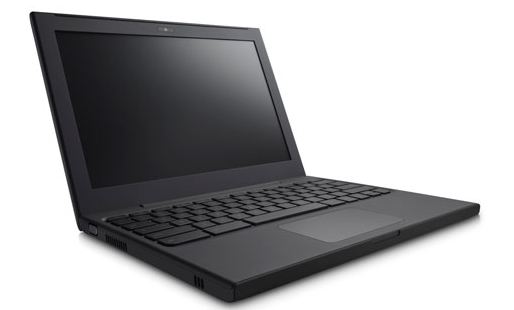
After one million people, myself included, begged to get access to Google's CR-48 Chrome OS notebook pilot program and thousands of devices were shipped, Google is taking what it's learned from the months of feedback and bringing a full-on assault to the established OS players (Apple and Microsoft) with delivery at scale of Chrome OS powered notebooks, starting with Samsung and Acer, scheduled to debut in the United States and six other countries on June 15th. Keeping with the company's Web-centric, speed addicted browser focus, Google promised at Google I/O today what they see as the first computers which speed up and improve the longer you use them, rather than the well-known reverse.

The devices, starting at just under $350 for the 11 inch Acer model and rising to nearly $500 for the 3G-capable Samsung offering, are to be sold on BestBuy.com and Amazon.com initially, while also being sold directly to businesses, educational systems and government for $28 a month for the former and $20 a month for the latter.

Google's promise, delivered convincingly by Chrome's Senior Vice President, Sundar Pichai, is that by making the notebooks as "nothing but the Web", this will dramatically reduce complexity, management, and keep apps up to date. Combined with integrated 3G connectivity, initially with Verizon in the US, and battery life between 6.5 hours on the Acer and 8 hours on the Samsung, the devices, like the CR-48 I've been using at the conference and elsewhere, look to deliver inexpensive anytime connectivity and the elimination of constantly searching for power plugs.

Google arrived at these announcements after rethinking the Web browser and the operating system itself, doing away with legacies of the past, Pichai explained.

"To deal with the Web on a browser, you have to deal with the legacy decisions of the last 30 years. Once you're inside, you have to make sure you manage your apps. Every single app has to be up to date," he said. "The experience is really complicated. We wanted to rethink the entire experience down to nothing but the Web. That's what Chrome OS is - an end to end experience."


Pichai's comments were echoed by Google cofounder Sergey Brin in a follow-on press briefing, where when asked if this was a direct attack on Windows, that there was nothing inherently wrong with Microsoft's offering but that "The complexity of managing your computers is torturing users, and it's a flawed model." This flawed model still is running XP at more than 50 percent of businesses today, it was reported, so this means there's not only a lot of opportunity for growth, but also significant challenge to make inroads at places that have often been reticent to change and conservative.

Consumers, besides the initial few of us who got our hands on the CR-48, will get their hands on Chromebooks (as they're now called) in just over a month. For the Web addicted, it could be a very compelling offering, one that both Apple and Microsoft have to watch closely and take very seriously.

February 24, 2011

Windows Phone 7 is the Best Windows I've Ever Tried

Windows Phone 7 is the Best Windows I've Ever Tried

While I am typically skeptical when it comes to products from Microsoft, I am remarkably surprised by the great quality of Windows Phone 7. Over the last few days, I have been using an HTC HD7 device running Windows Phone 7 alongside my Android devices and occasional iPod Touch use, and without reservation, I believe the Windows Phone 7 experience to be a serious challenger to both platforms in terms of quality, intuitive use and simplicity - things you usually won't catch me saying about Microsoft, or Windows specifically.

As I wrote back in June, I am trying to offer true pragmatism in a world of fanboys - a real challenge, especially when it can be fun to debate platforms, operating systems or our favorite technology innovators. Like I did in that same month with my initial tests of Android and the HTC Evo, relative to my iPhone, I've put my primary phone aside for the most part in the last few days, using it only for phone calls and the occasional app I can't get on Windows Phone 7. Fair is fair after all.

A Windows Phone 7 Syncing With My Mac? Armageddon, Right?

What I've found is that Microsoft has delivered what is quite possibly the most innovative approach to the mobile phone interface since the advent of the first iPhone. While most Android and iOS products are best represented by screens of application icons, with the occasional folder or widget thrown in for good measure, Windows Phone 7 brings tiles for some of the most useful actions to the front of the device, such as phone, mail, Internet Explorer, the marketplace and People, which draws heavily from your Facebook account, if you connect the two (and you should). Beyond the first page of tiles, accessing all downloaded apps is a simple swipe to the left away, and you can add any app to the front page by long pressing and clicking "pin to start", keeping in line with Windows' traditional message of the Start Menu.

Contrary to Android's Wild West mentality in terms of applications, due to the device being an open system, Microsoft's user interface guidelines are seen everywhere. Every app elegantly fades in and out when open or closed, and you can swipe between different aspects of the app in what's known as the panorama. Every app presents a unified top-level font and sub-level fonts for lesser important items. When necessary, these apps too use the same tiles present on the start page of the device. What is lacking in creativity is more than made up for in each app behaving in the same way as expected, and a dramatic cutdown on the learning curve.

Desktop Syncing My iTunes and iPhoto to Windows Phone 7

Calling this phone OS Windows is pretty much a detriment to the device, in my view, thanks to that OS' history and associated baggage. Luckily, there is no such thing as a Start Menu in the traditional sense, no Windows Dock, and no obvious folder structure riddled with tie-ins to 1980s-era DOS. Without being too detrimental to Android, my current mobile OS of choice, one need only look at the crazy ways users are trying to upgrade their Samsung Epic devices to Froyo to understand how much work is needed on that end to get away from the geeks and more to the mainstream.

After a year or so of being on a cloud-oriented mobile OS, I was almost surprised with how easily the Windows Phone 7 device easily synced with my Mac and the relevant files. Forget about the Microsoft vs. Apple arguments of the past. I just downloaded the free Windows Phone 7 Connector for Mac, connected the device by the included USB cable, and immediately had access to my iTunes and iPhoto content on my HTC HD7. This alone is further than I've ever come with my Android phones, which to date have simply pushed content from photos I've taken back to the computer, and not bidirectionally. This doesn't change my view that yes, the Web will be the center for the mobile world going forward, but it is somewhat reassuring to know I can always go back to the PC (in this case a Mac) as the hub if needed. I'd like to see Google offer an equivalent desktop sync for Android users, even if it did nothing else but visually display how data was moving between the phone and the cloud.

The HTC HD7 Device I've Been Testing

Within minutes of turning on the Windows Phone 7 device and connecting to my home WiFi (on Apple Airport), I registered my first Live.com email address, and was able to browse the included Marketplace, which like iTunes and the Android Market, is separated into categories for easy browsing (HTC Apps, apps, games and music at the top level), and into top apps, new apps and free apps, much like its counterparts. This led me to discovering and downloading many apps for the device, starting with the basics like Seesmic, Twitter, Facebook, Foursquare, Stocks, the Weather Channel, YouTube and others. In each case, the apps behaved as expected, but with the simple Windows Phone 7 UI.

Where Windows Phone 7 is lacking thus far, as you can expect, is in the breadth of apps. So far, there is no Angry Birds (though that's been announced). There's no native client for Sonos or Spotify, which has me tapping into my local music library, and it's a little shy (so far) on top-quality games. That's no surprise given Microsoft's current position in the market, and relative newness of the platform, but if they can move beyond the initial reports of slow sales, there's a good quality environment for users in here. And yes, there's no copy/paste yet, or even screenshots. Too bad, or I'd show them here.

To be entirely fair, I haven't stress tested Windows' calling qualities and features as I did Android. In fact, I haven't even inserted the T-Mobile SIM card that came with the device, because I don't want to start a new number and new plan with yet another carrier. But even with simple WiFi access, I have been able to see how the device handles browsing the Web (quite well with Internet Explorer), the accuracy of its GPS, via Foursquare, and how well it handles e-mail and other social networking activity. The product's close ties to its Zune family also actually present a high quality music and video experience as well, which gets even better considering the bundling of a native Netflix app for Windows Phone 7 which means I can instantly stream anything from my queue right to the device.

When I switched to Android, I correctly forecast that Google's inroads with multiple manufacturers, carriers and eventual user growth would lead to more developers and higher quality applications. This has happened, and has steadily improved my experience on Android, including to tablets like the Samsung Galaxy Tab (which I own) and the Motorola Xoom, which debuted yesterday. What's interesting about the Windows Phone 7 experience is that there's no drop-off in quality from one OS to another. If forced, I could absolutely live within this device and not be too much worse for the wear. I'd miss quite a few apps today, and might find myself without the breadth of options available with Android, but make no mistake, this is the most pleasant device I have ever used that sports a Windows icon, and I am eager to see if Microsoft can overcome their rocky start in smartphones to be a real challenger. The more the merrier.

February 4, 2011

Yahoo! Hires Hotmail Vet to Manage Mail, Flickr, More

Yahoo! Hires Hotmail Vet to Manage Mail, Flickr, More

While most of the recent personnel news surrounding Yahoo! has dealt with who has left the company rather than who has joined it, the company is expanding its efforts in communities, social and communications, building out a corporate roster below Carol Bartz that features many former Microsoft and MSN alumni, looking to restore the company to its once lofty leadership position on the Web. Joining the purple people on Monday was Steve Douty, one of the first five employees at Hotmail during the Web 1.0 days, tasked with owning product management as the vice president of communications and communities, including properties such as Yahoo! Mail, Yahoo! Messenger, Yahoo! Groups, Flickr and Yahoo! Answers.

Reporting to Bill Shaughnessy, the company's senior VP of global product management, who in turn reports to Blake Irving, Yahoo!'s chief product officer, Douty is responsible for product strategy and roadmap to rollout for the products' current offerings and their future plans, including how they would be monetized.

Like its counterpart at Google, Yahoo! has struggled in some cases about delivering uniformity of product between properties - even while Yahoo! Mail and Flickr especially have maintained top positions in terms of global use. In talking with Douty on Friday, he told me that one thing the company could do a better job with is focusing on integrating these services, and keeping a user longer, aiding them to "go deep into Yahoo and then naturally experience other services in a highly integrated and relevant way", using another Yahoo! property. This hope mirrors a similar challenge experienced by the MSN team during his time there following Microsoft's acquisition of Hotmail at the end of 1997.

Douty, whose Linkedin resume includes stops at Moxie Software and Groopix after Microsoft, joined Hotmail in June of 1996 as the first businessperson at the company, running marketing, product, sales and business development, he said. He recounted to me stories of jump-starting the adoption of free Web-based e-mail through college newspaper advertisements, and making the user experience incredibly simple, including getting a new personal e-mail address within a minute of entering the site and sending a message in the second minute. "In two minutes, you could compose and send a message with your own mail ID," he told me in a face to face meeting last Friday. This led to significant word of mouth for Hotmail that rivaled or even outperformed the service's much-celebrated viral capabilities, including the standard email signature.

Yahoo!'s no upstart, and handful of newspaper ads on college campuses isn't going to turn the trick to get the company back to being recognized as an innovative leader in the Web space. But Douty said he thinks there is significant opportunity for the company to grow from its current position, and capitalize on positions where competitors are not strong.

"There are a lot of incredible assets (at Yahoo!) that have not been adequately stitched and integrated," he told me. "Those assets, combined with a new fresh look on how people use the Internet and interact with others gives everyone an opportunity. There is an opportunity now for a brand-new entrant and a creative set of new offerings for people who are not being served well by anyone today, and Yahoo! is in a position to capitalize on that."

For starters, though Douty is in his first week on the job, it's possible Yahoo! Mail could play a connecting role with the many other services he owns, maybe not as the primary event, but as a conduit to other properties. He recounted Hotmail's challenges with spam, saying Yahoo! and Gmail both do very well at combating spam, and also said Yahoo! Mail is one of the Web's biggest photo properties, simply when photo attachments are included.

Yahoo!'s fight is no longer for search market share against Google. Like Apple's futile OS war against Windows, the time has come to look beyond those initial battles and find new ground to shine. Douty hopes his efforts, and being reunited with many former MSN colleagues, will be key in the company's similar turnaround. Of note, other MSN alumni include both Blake Irving and Bill Shaughnessey as well as John Matheny, the senior vice president of engineering at Yahoo!. With Office and Windows being revenue royalty at Microsoft, MSN never quite got the opportunity to lead in Redmond. In Sunnyvale, Web services are king.

Disclosures: Steve Douty is a director for MenuMax, a Paladin Advisors Group client. He holds the same role for Groopix Inc, a Paladin client in 2009. I am cofounder of Paladin Advisors Group.

January 15, 2011

Wanted: The World's Software Library, by Subscription

Wanted: The World's Software Library, by Subscription

Retail software prices are often eyebrow-raisingly high, and for the most part, inflexible. Every couple years, it's not uncommon for our family to shell out $150 to $500 for the latest Microsoft Office Suite. The full Adobe Creative Suite will set you back almost $2,000, and upgrades are $600. The home edition of Mathematica is about $300. Apple Final Cut Studio will cost you $1,000 and Logic Studio another $500. These prices are no doubt in line with professionals who require the software to live, but for more casual users, who might interact with the software infrequently, paying full retail price seems exorbitant. This sets up a market imbalance, similar to that of the world of music pre-Napster, where the consumer at times can seem justified for obtaining the software freely using another method.

I've previously stated that the vast majority of consumers are solid law-abiding citizens who are happy to pay for quality, assuming price is in line with the assumed value of the goods. When inequality enters the system, be it for full music albums, individual movie theater tickets, software, or even pay per view TV events, technology often comes into play to circumvent the traditional restraints.

Adobe CS Sticker Shock

The disruption of the music industry by Napster's steal what you can model, followed by iTunes' efforts to reign things back again at an affordable price point, has recently evolved further with the subscription-based all you can eat method, one not pioneered by Spotify, but popularized by it, despite years of Rhapsody and Napster (part two), and newer competitors like Rdio offering similar structures. Software, running in parallel, can similarly be downloaded for free on peer to peer networks, and can even be downloaded directly with options like the Mac App Store and Google's Chrome Web Store, but missing is the solution for the casual buyer who just wants to rent the software, occasionally accessing it, without needing to shell out for the boxed retail option, dedicating gigabytes of hard drive space for the privilege, being sure to keep one's serial numbers stored under lock and key.

A new business model, following the Music as a Subscription service, emerges with Software as a Subscription, more commonly referred to as SAAS (Software as a Service). SAAS applications can be enterprise-focused like Salesforce.com, or consumer focused, like Google Docs and Gmail, most of whom see all the activity taking place on the Web via a Web service. But what about the more traditional software titles from Adobe, Microsoft and others? What about an iTunes-like, Spotify-like service where the consumer could pay about $25 to $50 a month and tap into all the popular software titles in the world, reading and writing remotely, but saving locally?

One assumes the major reason this generic software subscription model has not emerged is because the traditional retail software giants can still get buyers at the hundreds of dollars apiece, and they would be less interested in spreading a customer's $500 to $600 across 12 months with other providers. So long as they are raking in the revenue, disrupting their own business isn't appealing.

For consumers with high-speed Web access and relatively powerful CPUs and GPUs, the infrastructure for creating such a software subscription service is there. Toss a few thousand titles on Amazon or iTunes and you can see that with smart cataloging, the ability to use any title in the world would be at your fingertips. Then too would come the next stage of the rollout - including video games and premium offerings with tiered pricings and tiered privileges.

Despite the music industry and other's concerns, Spotify's success is not in the ability for some folks to gain free access with ads, but in the popular and accelerating option for paid accounts, eager to shell out real cash for access to an immense music library. I may scoff at the idea of upgrading my Adobe Creative Suite again for a few hundred bucks, only using it sporadically, but I'd pay a good amount per month, like I do for cable TV, electricity and other plumbing, to gain access to the world's software library. Web-based SAAS for single instance applications is not enough. It's early days. A company that can get all the copyright holders to work together and find a solution to customers would be extremely compelling.

October 29, 2010

Podcast With @hackmanj on Blogging, my6sense, Marketing

Podcast With @hackmanj on Blogging, my6sense, Marketing

Wednesday night, as the Giants and Rangers were battling in game one of the World Series, BlogTalkRadio's Joe Hackman and I sat down to see if we could cancel out the jocks and reaffirm our position as geeks, participating in a podcast to discuss how bloggers can gain visibility through access and insight. We discussed my personal decisions to join my6sense as VP of Marketing, my conversion process from iPhone to Android, and how I try to juggle having three kids under 2 1/2 with all the other tasks that compete with my time.

Among the key discussion points, which might be fun for you to check out:

1) Defending one's turf, rather than being pragmatic & investigating alternatives.
2) Google's innovative moves versus struggles they have had in other areas.
3) A next generation of bloggers in their teens you should start watching now.
4) Microsoft's challenges in mobile a parallel for search.
5) The history of louisgray.com.

For those of you who have read louisgray.com for some time, or heard some of my previous podcasts, some stories may be familiar to you, but there's always something new.

Joe posted the discussion on his site here, and I have embedded it below. You can find Joe on Twitter at @hackmanj.

Listen to internet radio with Joe Hackman on Blog Talk Radio

June 25, 2010

The Art of Being Pragmatic In a World of Fanboys

The Art of Being Pragmatic In a World of Fanboys


For just about any topic or choice, there comes pressure to take a side, to align yourself with a group who can reinforce that your choice was the right one, and any alternative choice is somehow wrong or inferior. Even when choices, be they politics, sports or technology, are very similar, the differences are magnified, and camps are erected to defend one's position. It plays out every day in my RSS feeds and social streams, as you see a battle between Mac and PC, Facebook and Twitter or Buzz, Android versus iPhone. One's preferences even go so far as to define who you are, and who chooses to follow you, as most people would rather see their own viewpoints reinforced than gain insight into a differentiated position.

As technology improves, I've found the need to become entrenched and ready for Holy War, setting out to convert the unbelievers, is decreasing. For the most part, the leaders in any market are "good enough" for most needs, or the #1 property is clearly the best, and most all people are there. So I have been working to make my choices based on my own experiences, not rhetoric, data over emotion, and have increasingly made it easier to migrate data and profiles should the time come that I needed to switch.

It's enough to make my former would-be tattooed with the Apple logo soul turn over in its grave. Where I once gave Tips on Being an Apple Fanboy, I later spun up Windows 7 and found it to be pretty good, and I even turned my back on iPhone after finding the Android platform was a better fit for me. Just yesterday I sold back my iPhone 3G to Sprint and got a new HTC Hero for my wife so she too can be off the platform, and off AT&T.

I truly believe we are past the time where there must be opposition in all things. It can make for good headlines to pit one side over another, but if you think about it, we have more access to more things than ever before, and competition is making access to these products easier and better from more places. (Louis CK agrees)

I do not care what Web browser you use. I still harbor some disbelief that anybody uses IE, of course, but Firefox, Chrome and Safari are all good options. If you run Mac OS X or Linux or Windows 7, you are making an effort to be cutting edge. If you are rocking a BlackBerry or an Android or the newest model iPhones, you are probably on the right path. So good for you! I may have my personal preferences for "right now", based on my own insight, but the way I use technology is not the same way you do. The fact that I can tease out 10 to 20+ hours of battery life on my HTC EVO, but many notable bloggers can't doesn't make them wrong or mean I am lying. It's just a difference of use, and good tweaking on my part.

I do not care if you prefer Twitter to Facebook or LinkedIn, so long as you are getting what you want out of each service, and that it is serving you well. I may use them less than I use Google Buzz or FriendFeed today, but that doesn't mean I need to constantly play the role of evangelist to push you into agreeing with me. And I really don't care if you like WordPress or Posterous or Tumblr to my Blogger. That's your choice. Good for you.

So yesterday, when I did announce my finally moving off iPhone to Android, I got some response from around the Web saying I made the wrong choice, that I didn't understand how amazingly awesome the iPhone 4 was. Maybe, in a previous year, I would have been among the others saying the same. But now, I've decided I'll try new things and make a decision based on my experience, rather than going ahead in one way just because I always have. When I first tried the demo EVO from Google I/O, I was nervous with it, the same way I was the first time I sat in front of a Windows NT machine, expected to go to work. I didn't know if my experience would suffer, or I would be missing something. But, as you know, I found it to be quite good, and in the Bay Area, the quality of Sprint over AT&T was a major push for us to consider an alternative, after our family has spent hundreds of dollars each month to get less than acceptable service.

You know what my biases and preferences are. I'll talk about them here, and you can see me vote with my own activity. Maybe I'll convince you to like the same things I do. But I am working to shed any drooling fanboy label, and demonstrate an open mind. So do show me what you know that I don't. Introduce me to services and platforms I've never seen. It's a great time to be a tech consumer.

May 29, 2010

In Today's World of Mobile Choices, Look to the Core

In Today's World of Mobile Choices, Look to the Core


Since gaining the HTC EVO at Google I/O last week, I have been using it exclusively, as promised, leaving my iPhone 3G aside in an effort to remove the Apple fanboy shackles and find what it is I may be missing or gaining by making a choice of one platform versus another. While others are already comparing the EVO device to the iPhone, I am going to save that post for early next week. But while I am thinking about phones and mobile devices in general, I think it makes sense to first consider how each major mobile platform provider is approaching their device. Find the core to each platform, and you will have a better guide as to what is the right choice for you.

The world of smartphones is one of the most dynamic markets today, one full of change, and innovation. Application developers and most of the top technology companies are looking to mobile for considerable growth, both in software and hardware revenue. As the phones become more capable in terms of processing power, network capability and memory, many activities traditionally aimed at the personal computer, or television, are finding their way to your handset. It's not enough to have a dumbed-down Internet for dumbed-down devices. Consumers are expecting the same Web experience on the go as they do when in front of their home or work PC, and they are expecting applications to behave in the same way as they do on the desktop. Armed with this knowledge, Microsoft, BlackBerry, Google, Apple, Palm (HP) and others are each taking their own direction, and you can see what they have tried to accomplish resulting in why market segments are gravitating one way or another, and whether they can gain share.

BlackBerry and iPhone have to contend with Android now

For example, let's take a look at three major platforms: BlackBerry, Apple and Google.

BlackBerry, at its core, is an amazing e-mail device. It is targeting those people who send and receive hundreds of e-mails a day. The common target customer for the platform is a business executive on the go, be they a Wall Street trader or a field sales rep. BlackBerry handsets are well known for their extremely capable QWERTY keyboards, while they are less known for their applications or Web experience. Customers who need a phone that does e-mail extremely well love their BlackBerries, and BlackBerry, even with its newest array of devices has not been able to shake its legacy of being a messaging device. You aren't likely to see people talk about BlackBerry as an amazing gaming platform, or one built to browse the Web in a more capable way.

For Apple, the core of their approach to the smartphone market is in iTunes, the App Store and their ties to digital media. The iPhone is practically an extension to their incredibly successful iPod line. The product is managed through iTunes, synchronizes music, videos and photos through iTunes, and the iTunes App Store (an extension to the existing iTunes Music Store) is where all new functionality arrives. The iPhone changed the game for smartphones in terms of eliminating the QWERTY keyboard and becoming touch centric, but it isn't known for being the best in the world at e-mail, like BlackBerry is, and the company's App Store approach makes iTunes both a conduit and a bottleneck for applications - as they need to go through tacit approval from Cupertino before gaining the green light. If you are a customer looking for an application-centric phone, or you want a superior phone built for music you own, or to show movies you rent from iTunes, iPhone is the best.

For Google's Android line, their core is the Internet and Search, just like the company's fleet of Web applications tend to focus on data in the cloud and superior integrated search. While the Android Marketplace is a parallel of Apple's iTunes Store, its core applications assume always-on Internet access, and proudly feature not just simple hooks to Google Search, but also voice-activated search. Its Navigation application taps into the cloud, and the company's newest features, proudly highlighted at Google I/O, are about enhancing the way the Internet can be leveraged to transfer data through the air to downstream Android devices. There is no equivalent desktop application to iTunes for Android, and the focus of the device is on delivering a high-quality Web experience and accessing apps that tap into the cloud.

Of note, the much-discussed tiff between Apple and Google presents a more direct conundrum for Apple iPhone users than it does for Android users. iPhone users still leverage Google Apps, such as Google Maps, Earth and search Google on Safari. But on Android, Apple is practically invisible. Strike that - it is invisible. So if the two had a messy divorce, only iPhone users would be negatively impacted.

So for those three players, what makes the best mobile choice for you depends on how you actually use the phone. Keep in mind that for none of these players is their core focus to actually give you a better phone experience. Even a "feature phone" can get that right without too much work.

But what about Palm? What about Microsoft? What is their core?

I believe part of the reason Palm failed with its WebOS approach is because they didn't have an easy answer for what they did better than anybody else. Their messaging around the Palm Pre was that it was "fully featured", offering both the beauty of an iPhone and the QWERTY keyboard of a Blackberry. But it didn't do either thing better than anybody else, and there was no compelling reason to choose Palm.

Microsoft's new Windows 7 Phone Series similarly makes me question their core. To date, Microsoft's core has been in Enterprise and Office. They have dominated the business OS market, the office suite market and have had significant roles in a wide array of downstream services, from e-mail to peripherals, and yes, entertainment devices with the XBox. If Microsoft can make a compelling case that their Windows 7 Phone Series is the best business phone that integrates Outlook better than BlackBerry, hooks into companies' Active Directory and synchronizes Office documents better than any other device, then I think that's their core. (See: PC World: Microsoft Windows Phone 7 Should Rule Business Smartphones) But even PC World says Microsoft sees smartphones "through the eyes of the desktop". The desktop business OS has been their core, and it's come too late. Even their usual fans at PC World say "Windows Phone 7 will face a formidable challenge just to establish relevance."

The world of mobile smartphones is not the same old war we saw with the desktop. It is one about Web connectivity access to rich media, and being social. I believe there is room for perhaps one more player who can make "social" the center of their phone. Maybe Google gets there. Maybe Apple gets there first. Or maybe one of the players like Twitter or Facebook can find a way to launch a line of phones or a phone OS that is all about social, at the core.

Until that happens, I think you really have four choices - BlackBerry, Apple, Google or a mistake. Know who you are and what's important to you, and the platform choice will become clear.

April 2, 2010

Web Services or Apps? The Desktop Metaphor Is Collapsing.

Web Services or Apps? The Desktop Metaphor Is Collapsing.


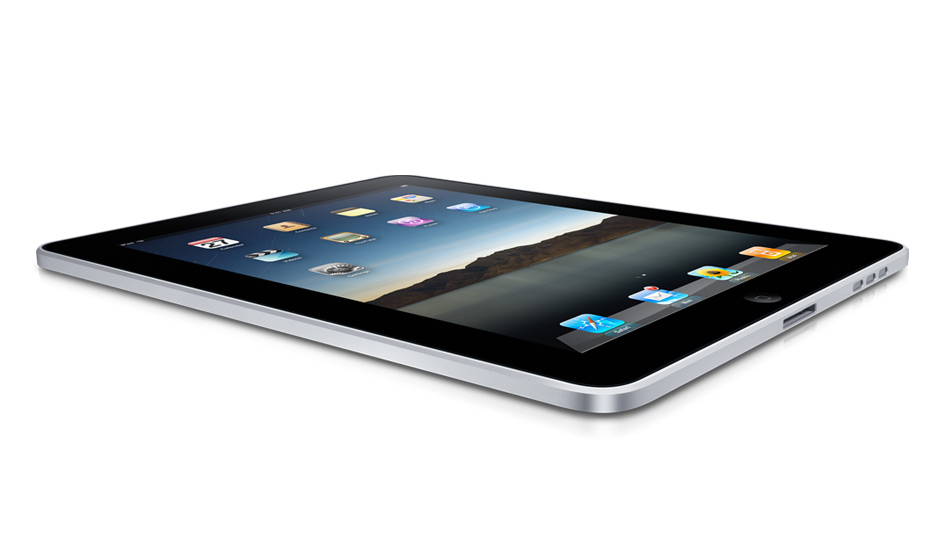
You can't click a link these days without bumping into news on Apple's new iPad. Some lunatics are already in line at Apple Stores across the country, waiting overnight to be among the first to buy the new device. My e-mail in box is swelling with new announcements of applications that are debuting for the iPad, and Apple released a list of Web sites yesterday that leverage HTML 5 (instead of Flash), making them "iPad Ready". Practically all forecasts expect the iPad to a big success on par with the iPhone and iPod, not a dud, like the ill-fated G4 Cube.

After years of tablet rumors, which initiated well before the iPhone, Apple opted to deliver an iPad that didn't run a slimmed down version of Mac OS X (i.e. Mac OS X Lite) as many had anticipated, but instead, opted to go the route of the iPhone, without a Finder/Desktop mentality, led by Apps accessible from the iTunes Store, with an integrated Web browser, Safari. While we have grown used to mobile devices that download and deploy apps - be they from Apple, the Android Marketplace or for Palm's WebOS, these apps were not designed for a full-size computer, and Apple effectively turned its back on a 25 year history of nested folders.

The debut of the iPad comes at a time when Apple's most notable assumed competition may not be Microsoft, who is by far the market leader in folder and desktop-based systems (and the core software to run atop said machines), but instead, Google. Google in the last few years has emerged to not just be a dominant player in its search engine market, but has risen to be a major player in the mobile phone industry - taking Apple's iPhone head-on - but also the operating system world. Its announcements for a Chrome OS, with the Chrome Web browser at its core, make it a very serious alternative, one that is designed not for a world of apps, but instead, one of Web services and data in the cloud.

The strain between the two companies, now well documented, is seeping into the way the company's employees perceive one another (and their products).

For example, upon reading the news that Boing Boing's Cory Doctorow recommended against buying an iPad, Google's Adam Lasnik shared the piece on Google Reader, adding: "the future is Open, and thank goodness for that". The inference, of course, is that Apple's closed ecosystem, contrasted with Google's belief that they are promoting open standards, is not where the world is headed.

One Googler's Opinion on the Future

In November of last year, I said Google's Chrome OS was not about deploying today, but preparing for a future with Web-centric world, where Web sites trumped applications, and standards like those promoted from the Buzz team allowed for a rich experience free of client software. Google's Chrome OS, unlike the operating systems of today, from Windows, Macintosh, Linux and others, lacks a desktop, or its equivalent. You can't exit out of the browser to see the hard drive, and it's like being at a permanent Web terminal. Applications run in the browser and crash in the browser - without any need to know if that's on Drive C or Drive D, in My Documents, My Settings or My Photos.

Meanwhile, in Redmond, Windows 7 has come and nullified many of the bad feelings about Vista. It's a pretty good operating system, all things considered. But it's not moving the ball forward in the way that the iPad/iPhone/iApps approach is, or in the way that Google's Chrome OS hopes to do. Apple and Google are betting, in no small part, that users will adapt to a new construct of how they interact with appliances. Apple's move seems to be more about manual input and self-contained applications, while Google is maintaining the keyboard approach, but doing away with the decades-old desktop and file folder structure.

Regardless of the over the top headlines asking if Microsoft can "survive in an iPad world", change takes time. While Apple was once seen as an outsider to a big market when they first launched the iPhone, and Google doesn't yet have penetration with Chrome OS, Apple now has significant mindshare and is seen as the one to beat in the innovation scale, but they haven't snuffed out Windows. Meanwhile, we haven't heard what Apple has in mind for Mac OS X Eleven. Will it merge the iPhone OS with Mac OS X, or will the dual operating systems evolve in parallel? I wouldn't be too surprised if Apple found a way to move us forward with the iPad and apps-based computing being the direction, with desktops falling away to the annals of history, but if they went this route, it is going to be a long haul indeed.