Showing posts with label Salmon (7 posts). Show all posts

November 22, 2010

Founders Moving On from Social Aggregator Cliqset

Founders Moving On from Social Aggregator Cliqset

Taking on Facebook, Twitter and Google in the fiercely competitive world of social networking and community building is a tremendous challenge that can be practically impossible to overcome, even with superior technology leadership and adherence to federated open standards. Cliqset, the wildly innovative social networking aggregator that was among the first pioneers to adopt Pubsubhubbub for real-time updates, and Salmon for cross-network comment posting, faces a murky future with news today that the company's founders, Darren Bounds and Charlie Cauthen, are going to be leaving the company, following an unsuccessful round of funding.

Despite a number of smart moves to make the site increasingly useful, such as the launch of social search in September, and the addition of Groups and Activity Streams in January, the site struggled to grow a consistent and growing community of users, with a short-lived Turkish invasion drawing a traffic bump and some amusement.

Speaking with Darren today, he said that he and Charlie are not moving on to a new project, nor have they sold the company, saying as founders of the company, it didn't seem appropriate to seek out other opportunities while simultaneously growing the site. But there are no regrets about the adherence to cutting-edge open standards with the site, which were ahead of practically any other service on the Web.

"A federated social Web agenda at Cliqset is something we chose to promote," he said. "The open standards aspect is something I believe is still the future. The roadmap to getting there is going to be a little longer than we would have liked. But where these standards can be implemented and improve efficiencies, they deliver real value."


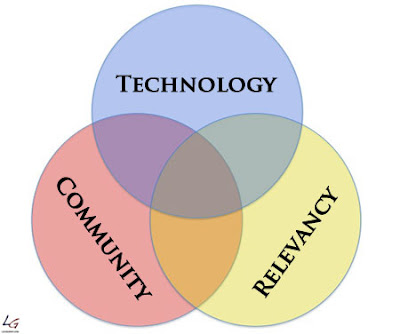
As I wrote a year ago in a post on the 3 social pillars needed for any successful network, one needs to find leading technology, community and relevancy to make a site a must-visit each day. For Cliqset, their technology was never in question, but scrapping for users was a challenge that didn't find a great deal of traction. Darren agreed.

"In order to build a community, you need massive differentiation today," he said. "It's fairly obvious in hindsight. Projects I would be working on in the future would be leveraging the existing social graph, and the need for success wouldn't be contingent on relationships and community within itself. In no means do I think Facebook is impenetrable and somebody can't build something to compete with it, but it's not an easy task."

There are no plans to shut down Cliqset.com immediately, as the company's investors have opted to keep it up and running, despite a lack of engineering and operational support. In the event the service were to be acquired, Charlie and Darren could theoretically be pulled back in, but that scenario is unlikely. As I have been saying for a year aggregation is great in theory, but sites like FriendFeed, Cliqset and Arktan haven't been able to find a unique voice that makes people go their way instead of the original sources of content - Twitter and Facebook. I am eager to learn about the team's next move - they're very sharp and were focused on pushing open standards forward. In an ideal world, their work will not have been in vain.

March 29, 2010

Cliqset, Status.net Support Salmon for Comments Migration

Cliqset, Status.net Support Salmon for Comments Migration


As Marshall Kirkpatrick noted in a post on ReadWriteWeb this morning, the Salmon Protocol project we first introduced back in October of 2009 looks like it is progressing beyond the planning stages, as it has been integrated in two small, but influential, social networking sites, Status.net and Cliqset - both of whom are strong open standards advocates laboring away in the shadows of larger communities.

The Salmon Protocol, which aims to define a standard protocol for comments and gestures (such as likes) to swim upstream to the originating blog, hopes to unify conversations across diverse locations. It's planned for adoption by Google Buzz (See: Designing Buzz for a Google-Free World) and solves the problem that first blew up back in 2008 around fractured conversations.

While many people, including myself, have adapted to a new world whereby conversations take place in a wide array of communities, it would be nice for the content originator to have one centralized location to see all downstream activity.

Evan Prodromou of StatusNet mentions integration of Salmon's digital signatures in a blog post from Sunday, where he also notes support for Activity Streams encoded in RSS 2.0 and Atom. The move, paralleled by deployment at Cliqset, should be what I hope is the start of a lot more announcements, from small and big companies alike, to make Salmon a reality. The next big target, which I am biased in favor of, obviously, would be for Disqus to integrate with Salmon and pull comments upstream to this blog.

I managed to find time to talk with Darren Bounds of Cliqset at SXSW earlier this month. In our quick discussion, recorded on CinchCast, you can find his comments on their support of open standards, and that network's direction - which could hint at why they're an early adopter of Salmon.

March 4, 2010

Designing Buzz for a Google-Free World

Designing Buzz for a Google-Free World

If you haven't seen a lot of applications built in the last few weeks that leverage the Google Buzz API, it's because there aren't any. In fact, Google hasn't yet rolled out any API for Buzz. According to the company, this isn't due to any backroom dealings where they plan to introduce proprietary code and hooks that tie activity to their platform, but instead, because they wanted to be sure they could first build a product that in fullness leveraged open Web standards, and start with that foundation to deliver an interoperable system that could continue to function even if Google were to "disappear off the face of the earth".

In a presentation to the Silicon Valley Google Technology Users Group last night, held at the Google campus, DeWitt Clinton, a software engineer for the company, talked to developers and other tech enthusiasts about the company's API strategy and approach to Buzz, and explained that Buzz is designed not to increase lock-in to Google, but instead, to leverage open technologies that will let data flow to and from sites without central ownership. While a Buzz API will eventually be released, it will leverage the same open standards that power it today.

"The first principle of Buzz is that we can build this on protocols that are open and free, but not centralized," DeWitt said. "Can Google disappear off the face of the earth and Buzz still works? We need to make this data federated and distributed."

On the day Buzz launched, I referenced much of the foundation for Buzz in a quick article about the open tools and APIs that "make Buzz hum". But last night, DeWitt expanded that story to include 9 major open APIs, briefly outlined below.

1. Atom

DeWitt called Atom "the lingua franca of the programmable Web today", explaining that Atom contains entries that are "well structured", and include source entry, GUIDs that enable deduplication, and specification of the content type. He said, "You are able to pass rich data in that Atom feed in a way that is more specific than other feed types."

2. AtomPub

DeWitt said AtomPub "has become the most popular paradigm for restful APIs on the Web." AtomPub expanded the original Atom format to include the ability to both create and update feeds, not just passively read.

3. ActivityStreams

ActivityStreams essentially watch users' activity and can specify rich verbs and actions within those feeds. This enables feeds for all comments posted on Buzz, all likes, or even alerts that one person following you on Buzz also follows you on another network. DeWitt's examples hint at future developments for the platform, as these specific feeds are not yet clearly visible.

4. Pubsubhubbub

Much discussed here on the blog, Pubsubhubbub reduces the need for sites to poll for updates, and powers real-time updates between services. DeWitt reiterated "the hub is decided on by the publisher" and "there is nothing Google-specific about that.", saying that the infrastructure and plumbing for Buzz has been laid for the last few years. Pubsubhubbub has been pioneered by Brad Fitzpatrick and Brett Slatkin, both Google employees.

5. MediaRSS

Developed by Flickr, MediaRSS syndicates rich media through both RSS and atom feeds, creating a structured namespace inside RSS for content and a thumbnail. Buzz leverages MediaRSS, letting you pull rich content, like Flickr photos, into the platform. Of course, PicasaWeb, a Google property, also supports MediaRSS.

6. OAuth

The product of engineers from all corners, including Twitter, OAuth was engineered "to solve a vexing problem in the industry," Dewitt said, explaining OAuth prevents the need to ask users for their name and passwords on third party sites, acting as a delegated authorization protocol that gives permission to the application. Google Buzz, like Twitter, leverages OAuth to provide authenticated access to your data.

7. WebFinger

A new-age version of the old command-line prompted, text responding Finger protocol, WebFinger aims to be a way to get public information tied to an individual, through their identity, assigned to an e-mail address. "We want people to identify themselves, and we want people to discover people," DeWitt said.

WebFinger is similar to the strategy of OpenID, but OpenID hasn't had massive adoption by end-users who have found it unwieldy. WebFinger, aiming to be less arcane, enables the independent nature of Buzz, helping to federate the data and distribute it by domain, owned by the end user. DeWitt said, "The profile lookup and notification mechanism can be in the hands of the user being addressed."

8. Salmon

Still in earliest stages of development, Salmon is an extension or replacement for the old PingBack model that had blogs informing the other about references or links. This "flawed" model only provided minimal data, and could not be verified, letting me send PingBacks anywhere I wish if I chose. Salmon's goal is to leverage what's being called "Magic Signatures", signed with a public key to prove and verify linkage.

The first approach for Salmon will be to migrate comments from aggregators to originating posts, as covered a few times on this blog. But DeWitt said that "Likes" are similar activities that could flow back with Salmon, or be used to notify users of "following" or other activity. DeWitt forecast that sites like Blogger and StatusNet would rapidly adopt and federate Salmon to transmit data updates.

9. Portable Contacts

Simply described, Portable Contacts show your information and that of the friends who you follow, providing users a secure way to get access to address books and friends lists without having to request credentials or scrape the data.

DeWitt also noted XFN, the XHTML Friend Network, and FOAF (Friend Of a Friend) as being key contributors to the Buzz technology stack today, adding that he was "glad smart people were working on this ten years ago because we are all benefiting from it now."

DeWitt, on his Buzz feed, has been talking a lot about open standards and their importance to the Google team at large. See @Jesse Stay A few points of clarification to your most recent post [1], because I believe getting the details right matters. and "The thing I find most attractive about Google Buzz is its stated commitment to open standards.", as well as his first post from February 21st, which thanked the standard developers: Standing on the shoulders of giants—a look at the people behind the protocols behind Google Buzz:

Given Google's size, there is a good amount of distrust on the Web from people who think they own too much of your data, know too much about you, or have goals that run contrary to your own ideals on privacy, communication and sharing. Not even DeWitt's detailed presentations and explanations and promises of openness and data portability will convince everyone that they are on the right path. But I personally believe the frankness and detail that is being shown here is not just promising a strong future for this individual product (Buzz), but also in extending the groundwork done for the entire Web, for products and services we haven't even seen yet.

DeWitt adds: "All of these protocols are open. They are literally also all free. They are intended to be used by everybody, with or without Google being involved. You don't have to ask us if you can use Salmon or Pubsubhububb. We have a liberal and permissive patent license."

Is Google going away? Not today, and not this year. Is Buzz perfect? No. Of course not. Can it do all the things I can do on other sites, like FriendFeed? No. Not yet. But it seems that the Buzz team has opted to make tradeoffs that favor fast shipping and openness over completeness and individual features. And if you don't trust Google, it sounds like you can do something about it.

"We are pretty adamant about not building this on proprietary technology," DeWitt said last night. "If any of you feel that it is not going in the right direction, you have the power to change its direction and Google will not stop you."

You can find me on Buzz here and can follow DeWitt Clinton on Buzz here.

February 9, 2010

Google's Open Tools and APIs Make Buzz Hum

Google's Open Tools and APIs Make Buzz Hum

The debut of Google's new social venture, Buzz, came with all the subtlety of a freight train. Like a freight train, you could hear the rumbling of Buzz as its launch approached, fueled by the vast array of open social tools that the company has been championing over the last few years, and a number of key hires that show Mountain View's commitment to making users' data portable and non-siloed, in visible contrast to alternative networks, most notably Facebook, who has made it notoriously difficult to export data in its six year history.

Though clearly a 1.0 version product today, Buzz is primed for significant improvement in the next several months, which will be driven by data measured within Google, gathering users' feedback - as they no doubt will be demanding the ability to share updates to downstream services, the introduction of an enterprise version, limited by domain, and other enhancements. But from the beginning, Buzz is built to be open.

"We are committed to open standards, and we want to build a non-siloed product at every turn," said Bradley Horowitz, vice president of product management at Google on Monday. "You will see us take all these open standards, like Pubsubhubbub, Webfinger, Salmon, and use this as a vehicle to demonstrate to the world what it means to use them."

Buzz also fits in nicely with the Social Graph API being worked on by data portability pusher Brad Fitzpatrick, which also powers your Google Social Circle. While the social circle learns how many direct contacts you have in Google chat, and finds other connections through registered links, Buzz tracks your most frequent connections by e-mail and chat within Gmail, taking a step further and surfacing active "friend of a friend" content, should it be deemed relevant.

"Social media today is a fiefdom of friends," said Vic Gundotra, vice president of engineering at Google on Monday. "We believe your updates will go where you want them to. We are going to work hard to enable that."

Of note, despite the highly visible business development relationship forged by Google with Twitter to power the company's real-time search, Buzz simply taps Twitter's standard API to gain access to users' updates, and it is expected this access will be sufficient.

November 18, 2009

Open Web Foundation Speeds Protocols' Legal Contracts

Open Web Foundation Speeds Protocols' Legal Contracts


On Tuesday, the Open Web Foundation released an agreement aimed to speed new specifications' ability to be adopted by downstream users, with the intent of spreading open tools throughout the Web. Though occupying the always-complicated intersection of both the legal world and the tech world, the agreement is very interesting. The non-profit organization, featuring leading geeks from many of Silicon Valley's best known and most-respected companies, is hoping to promote data portability and open Web standards, no matter their source. Tuesday's agreement makes it easier for others to implement specifications without requiring lengthy bureaucratic legalities, and already features 10 major protocols and services as having signed up.

Among the services that have committed to using the new agreement include Yahoo!'s Media RSS standard, OAuth, Microsoft's WebSlice, and my often mentioned personal favorites, the PubSubHubbub and Salmon Protocols, being promoted by employees from Google.

As explained on the Yahoo! blog, on Facebook's Developers' blog and at Standards Law, services such as OpenID and OpenSocial were both forced to spend a great deal of effort working on legalities, taking their sharp engineering resources away from doing what they do best - code. The hope is that by setting a standard for approvals and access, much of these headaches can be eliminated.

The agreement itself is lightweight, compared to many legal tomes, and essentially mirrors standards set by Apache and Creative Commons, both of which have much history in the Web community. It covers how to handle attribution, that users can be trusted to leverage the work without fear of patent lawsuits, and that downstream users will not lay claims to others' efforts.

It could be yet another important step in making sure the Web is open, and that users can expect similar behavior and access capabilities from site to site and service to service. See also:
The Blurry Picture of Open APIs, Standards, Data Ownership
from October 29th.

November 11, 2009

Attacking the Web's Beverly Hills and Schenectady Problem

Attacking the Web's Beverly Hills and Schenectady Problem

Not too long ago, every new site you joined on the Web forced you to provide a daunting array of details about you in order to join. Full pages of pull-down menus asking about your date of birth, your marital status, your home address and other information was standard. But over the last few years, with advents such as OpenID, OpenSocial, Facebook Connect, and more recently, Twitter OAuth, personal identities are becoming portable - letting you sign in with a dedicated login to a new site, and reducing your need to store yet another password.

Kevin Marks, vice president of Web services at BT, formerly of Google and Technorati, relayed at the Defrag Conference this afternoon that under the old way, companies, after accumulating a high number of users, would often find they had an extremely high number of users responding they lived in either Beverly Hills or Schenectady, New York. Why? Because they were saying their zip codes were either 90210 or 12345. They were lying - sick of answering page after page of personal data for yet another Web site.

In the years since, thanks to efforts like OpenSocial, we have seen the rise of Web standards that interoperate, letting you pass along your personal information and credentials to new sites without having to create yet another user name and password.

"Over the last two years, we worked out the sanitization of protocols, so it could fetch things from one site to another," Marks said. "In that time, OpenSocial is up to 1 billion users. There are sites all over the world who are using this."

Marks broke down the solution to the real identity problem into four pieces:
  • Me
  • My Friends
  • What We Do
  • The Flow
Tools like OpenID and WebFinger solve for "Me", Portable contacts, through the unification of the Vcard specification, solve for "My Friends", activity streams solve for "What We Do", and new protocols like AtomPub, PubSubHubbub and Salmon are solving the "Flow". As you know, I have been a big proponent of tools like PubSubHubbub, Salmon and tools like Facebook Connect and Twitter OAuth, as they not only pass along data between sites, but also make data pass between sites more quickly. And while they are causing what could be considered a revolution, it is happening through the simple evolution of activity that is already happening.

"All these standards are empirical standards," Marks said. "We first did this with microformats. We asked what people are doing already, and agreed we would do the same thing."

Now, if you do tell companies you live in Beverly HIlls or Schenectady, New York, there's a greater chance that you really do, and maybe we'll believe you.

October 17, 2009

Proposed Salmon Protocol Aims To Unify Conversations on the Web

Proposed Salmon Protocol Aims To Unify Conversations on the Web


As comments on the Web become fragmented, conversations that occur on downstream aggregation sites often are taking place in a silo, disjointed from parallel discussions on the originating Web site. Over the last two years, many people have found this evolution controversial, hoping to unify the conversations in a central location - and some services, including JS-Kit's Echo and Disqus, have taken the first step by pulling external discussions to the source. But a brand new proposal, authored by John Panzer of Blogger, called the Salmon Protocol, is looking to take advantage of Pubsubhubbub to unify the conversations in all places, both upstream and downstream. And yes... the name of Salmon comes because those fish manage to swim upstream, just like the comments.


An Initial Presentation on the Salmon Protocol

As discussed in Friday's panel at Blog World Expo on technology and the real-time Web, Pubsubhubbub essentially works as a middle-man conduit, taking information from a data's source passing along changed data to downstream destination sites. The proposed Salmon Protocol would similarly watch both source and destination sites for comments, and upon discovering new comments, it would send the new comments to the site which is lacking the full conversation. If multiple downstream destinations are designated, the Salmon Protocol will also populate these multiple sites.

In conjunction with Pubsubhubbub, the Salmon Protocol leverages the newest iteration of webfinger, enabling publishers to receive comments and verify subscribers - as a form of true identity recognition, similar to how both Disqus and JS-Kit have you register for individual accounts with either service. An additional side benefit to leveraging Webfinger would be to dramatically reduce the potential for spam, assuming each individual has a unique ID.

The debate over fractured conversations has risen and fallen over the last two years. In September, I essentially said I was done listening to people complain about the issue after hearing complaints regarding Google SideWiki - as I believe people will want to have conversations where they are comfortable, and that they shouldn't be forced to come back to a single source. This is a point I have been hammering since the first major flareup back in April of 2008. (See: Should Fractured Feed Reader Comments Raise Blog Owners' Ire?)

Many people believe that transporting comments from one site to another and making the conversations one could cause confusion, or even make potential commenters uncomfortable. With this in mind, John has suggested that users "be made aware of the publishing scope of the comments they leave," adding "For some aggregators, this may be implied (all data is public), for others a warning or a checkbox may be necessary." (See: Salmon Protocol (Draft) Protocol Summary)


A Test Comment from the Aggregator Via Salmon


The Resulting Comment Back On the Blog Via Salmon

There is a test playground for the Salmon Protocol, and I can verify that it already works. If you want to test it, one option is to take a testbed Blogger account and point the Salmon Protocol your way. It occurs automatically, and comments that happen on the downstream aggregator will make it back to the blog immediately, thanks to Pubsubhubbub. Now, the quest becomes to turn this brand-new protocol into a new standard - one that could pose a serious challenge to services like JS-Kit Echo and Disqus, even including threaded replies. If done well, the long debate over unified conversations could soon be over.

Learn more at: http://www.salmon-protocol.org/.