Showing posts with label iPad (36 posts). Show all posts

May 2, 2014

Staying Ahead of the Curve on Tech Trends Isn't Trivial

Staying Ahead of the Curve on Tech Trends Isn't Trivial

When it comes to picking choices in tech, making the wrong decision on formats, manufacturer, or version can set you back in terms of dollars, leave you with rapidly obsoleted hardware, or find you investing time in something that provides you with non-optimal returns.

As an early adopter, you have a higher tolerance for risk and you take bets on product direction before the rest of the population may agree with you, and your choice to move one direction can act as the initial spark in a good situation, or as the canary in the coal mine, in a negative one. This thought crossed my mind as we saw the news yesterday to Sony's recent struggles, largely tied to their ongoing challenges hawking Blu-ray.

As Sony was quoted in the Verge, "demand for physical media" was "contracting faster than anticipated," and they were left holding the bag. But this really shouldn't have come as a surprise. More than three years ago, I said I was through with physical media, and I haven't looked back. Between streaming video and audio services like Netflix, Spotify and Google Music, or eBooks from Google Play and Amazon, the Web has taken over where physical media couldn't compete.

And let's be honest for you Netflix users? How many of you still get the DVDs? Netflix is a perfect example of a company that saw the transition coming and pivoted to where the trend was going. Now they're overwhelmingly known for their streaming services instead the traditional red envelopes.

The last five years have seen pronounced trends that in hindsight are impossible to ignore, from the rise of smartphones and debut of functional, popular, tablets, and the integration of social networking in all aspects of society. You can debate the ebbs and flows of financials for some of the larger social networking sites, but you can't deny their immediate impact.

On the tablet and smartphone side, there were two obvious trends that people could recognize right away if they kept an open mind. The first was that the iPad was going to be a hit. The second was that Android, due to its partner-friendly approach and rapid iteration, was the horse to bet on.

Without pulling an +MG Siegler and calling this post "I was right. Let me tell you why...", I'll highlight a few bits from both topics.

Let's Talk iPad

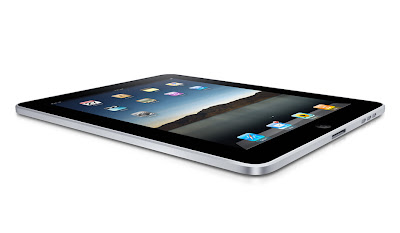
Immediately reacting to the iPad's introduction in January 2010, I didn't go over the moon and claim the new consumer tablet would solve world hunger and eliminate illnesses in our lifetime. But I did see it for exactly what it was, concluding, "They are going to sell a ton of these machines, and you'll see them in places you never expected. Casual computing and content consumption are going to drive it." That's exactly what happened, with the hindsight of four-plus years.

The iPad may actually have sold too quickly and been too successful a product to keep Apple beating expectations, but it found a niche between the smartphone and the laptop, and set the stage for the tablet being the first computing experience for my young kids.

Companies that bet against the iPad (or tablets in general) have found themselves swimming upstream, defending an antiquated platform and in some cases, extracting revenue from fatigued customers, whose numbers are decreasing.

Let's Talk Android

While Apple was pushing the iPad and doing tremendously well, iOS wasn't the smartphone OS I ended up enjoying, for a whole bunch of reasons. Six months into the iPad's lifespan, I turned in my iPhone and turned to Android, saying at the time, "a bet on Android is a bet on the future. I am betting on an ecosystem and an application environment that encourages best of breed developers to move their product to a growing population of smartphones, and I expect to reap the benefits. "

There's no question in my mind now that was the right move - and you have to keep in mind that was more than a year before I entertained the opportunity of joining Google myself. I saw the trendlines that pointed to Android being the quantity leader, with greater partnerships and a fast-growing developer ecosystem that brought top apps to the hundreds of millions of users, and that's exactly what happened.

Let's Talk Smaller Tablets


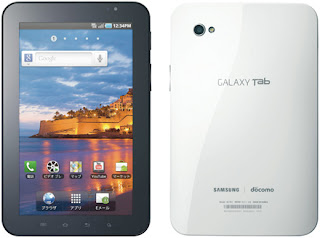
Soon enough, the first generation iPads I bought aged, and another trend emerged - of the small form factor tablet, starting with the Samsung Galaxy Tab, which I preferred, and later the Nexus 7. This 6-7 inch form factor was a perfect fit for customers, as you could see with the rise of the Galaxy Note, ever larger standard smartphone sizes and the rise of the Kindle Fire and Nexus 7 line. Even Apple capitulated eventually with their own iPad Mini, although they're not usually the ones to admit they were late to an idea.

So what am I getting at? I'm not here to tell you I have a crystal ball that tells the future. But you can see, with your own eyes and experiences, what the trends are going to be, and being stubborn because something has always worked one way doesn't mean it's a good idea. You have to evolve as a user, as a developer, as a businessperson, or as a company, to make sure you're impacting that change and choosing wisely. Or you'll end up with a home full of VHS tapes. Don't forget to Rewind.

Usual Disclosures: I work at Google which is behind the Android operating system and is a partner or competitor with many of the companies in this post, like Samsung, Apple, Amazon, Netflix, Spotify and more.

August 19, 2013

The Twitter Google Netflix iPad Dotcom YouTube Facebook Era

The Twitter Google Netflix iPad Dotcom YouTube Facebook Era

As technology has weaved its way into practically every aspect of our lives, it has become something of a challenge for historians, journalists and others to try and encapsulate this new era of near-pervasive Internet, dramatically reduced barriers to publishing, and obsessive gadget accumulation.

I grew up in a world where a whole generation of people could be summarized easily, defined by population bumps like the Baby Boomers, a shared experience in battle, as Tom Brokaw frequently cites in The Greatest Generation, or quite simply, by the assigned letter given to those born in a ten to fifteen year period, like Generations X and Y. Now, newsmakers and analysts alike are trying to explain just what this new era should be called. Is there one device or one company or one shared experience that defines us?

With some quick research, it's clear there are many players vying for the elite status of owning our tech-savvy era. I tapped into Google (disclosure: I work there) for a few examples. Let them play out and see if you favor one over another or have a better option. All screenshots current as of Friday, August 16th, 2013.


The iPod Era: 69,100 Google results
Represents: The iPod at peak was more than half of Apple's revenue, outpacing Mac and all software sales. The iPod was a cultural phenomenon representing fashionable portability of digital media and personalization of music listening.
Is it over? Yes. According to AppleInsider, the iPod Era ended in 2010.


The iPad Era: 132,000 Google results
Represents: The first successful tablet computer disrupted the old way of doing many things, and picked up where Apple's iPod and iPhone had left off.
Is it over? Probably not. The iPad Era launched in 2010. Debate from AdAge questions if it's done.


The Google Era: 259,000 Google results
Represents: Near-instant retrieval of information, and a reduced need to memorize. Ability to scale.
Is it over? Nope, unless you think Business Insider is onto something.


The Twitter Era: 401,100 Google results
Represents: Near-instant ability to communicate and a real-time medium.
Is it over? No.


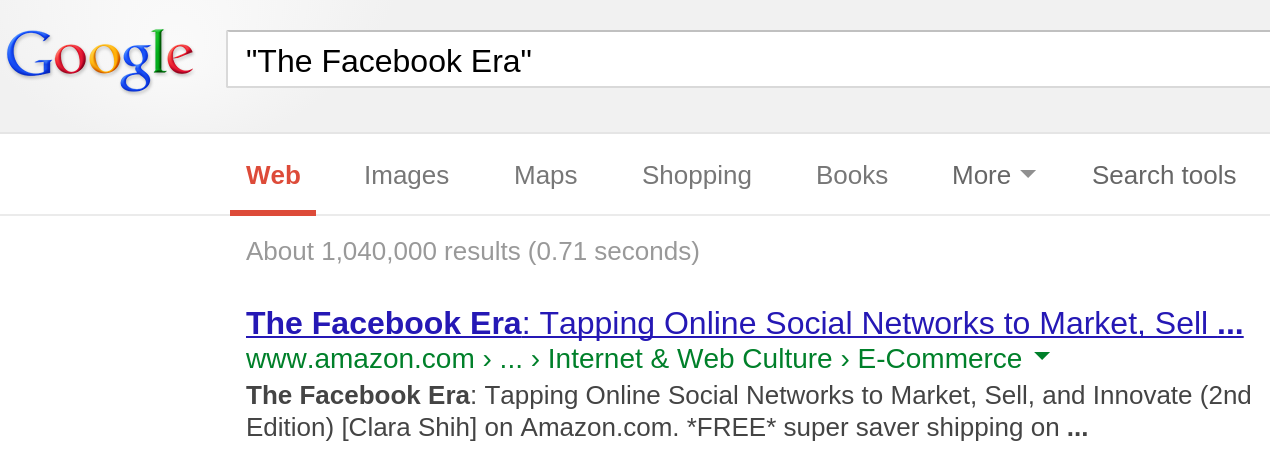
The Facebook Era: 1,040,000 Google results
Hey look! A book: The Facebook Era
Represents: Increased connections with social ties, and ease of discovering personal information.


The myspace Era: 59,500 Google results
Represents: Like Facebook, only earlier, more personal information online, simple creative sharing.
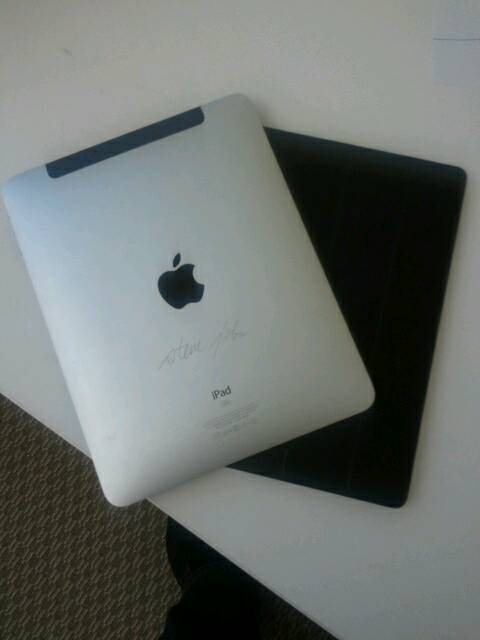
Is it over? Yes. Absolutely. This dude missed the whole thing.


The Blogging Era: 150,000 Google results
Represents: Ability for anyone to publish, in long form, at no cost.
Is it over? Getting there. In 2004, this guy claimed 2014 would finish it up.


The Android Era: 297,000 Google results
Represents: The entry and rapid adoption of Android as a smartphone OS. 
Is it over? No.


The YouTube Era: 210,000 Google results
Represents: The ability of anyone to publish video and have it be seen around the world. Also represents casual video consumption relative to professional 
Is it over? No.


The Dotcom Era: 1,490,000 Google results
Represents: Referred to as much as a bubble as an era these days, the first rush online by traditional services and businesses. Many did exceptionally well. Many more disappeared. 
Is it over? Yes. At least the first round.


The Microsoft Era: 423,000 Google results
Represents: The last few decades of a world where personal computing was dominated by Windows PCs and Microsoft software.
Is it over? Many people think so. In fact, a "Post-Microsoft Era" has been discussed.


The Steve Jobs Era: 67,900 Google results
Represents: Steve's personal impact on the world of technology, design, marketing and one of the most successful companies in Valley and tech history.
Is it over? Unfortunately, yes, as Steve passed away, but his impact lives on.


The Netflix Era: 41,600 Google results
Represents: On demand instant access to a wide variety of films and TV shows, and the business impact for those in more traditional markets. A disruption of Hollywood.
Is it over? No.

So what era are we in? If you went by total numbers, the Dotcom Era had the most Google results, but that's historical by nature. The Facebook Era is in second place, with Google properties, including YouTube and Android having nearly as many when combined. The iPad era is still strong, with Twitter putting on a good rising show, and Microsoft being high in the rankings, given its market penetration.

Other good options I either didn't run or tested but cut so this post isn't a mile long... "The Yahoo! Era", "The Amazon Era", "The Google Glass Era", and more... it's all fun. Can you think of others? What's the winner in your view?  

October 5, 2011

Steve Jobs: An Irreplaceable Icon

Steve Jobs: An Irreplaceable Icon

The world's outpouring of affection for Apple cofounder Steve Jobs is remarkable. In a time when scandal and tawdriness make headlines, and the foolish are revered, Steve represented something else - an intelligent, perfectionist approach to creativity, aimed at the greater good to constantly refine and bring value, through technology - and somehow won the hearts of the people. Amidst a world of awkward poor dressing techies, Steve exuded class and presented himself as being above the fray. His presentations were a masterpiece. His products were art. He took a world consumed with cutting margins and making it up in volume and made it emotional - a status symbol. He helped define a generation of computing and electronics in hardware and software, and became the man on a pedestal by whom all other CEOs and innovative tech leaders are measured - a tall task for the current crop and those to follow.

The last 4 or 5 years of uncertainty around Steve's health (and I feel like I know him so well that he should simply be referred to as Steve) were the unspeakable story - the deep hope that he could surprise us all - again - with "One more thing" and show that he had somehow beaten cancer and proven his immortality. All while fighting unspeakable challenges at home and in hospitals, he and his extended team churned out more and more products, hit after hit that built Apple into the highest-valued company in the world. Each keynote worried us that it would be his last. His very figure was dissected by cheap online tabloids trying to score a few million page views, and we rejected the opportunity to have this new shrunken image burned into our pupils, because we knew that despite his newfound frailties, Steve inside remained the lion we all knew.

For 15 or so years, Apple and Steve Jobs have once again been whole - practically synonymous. College students everywhere can't remember a time when Steve was not leading the company. But for those of us who suffered during the dark days of Apple, when the word "beleaguered" followed the company everywhere, and showing up with a Mac in a world that was going Windows was a conversation starter, knowing you were different.

It's not just that Steve did his job better than anybody else when he was on top. It was that he took a company in the middle of a very public suicide and turned it around, using the perfect mixture of humility when it was needed, and arrogance when it too was needed.

During the summer before my junior year in college, I remember my roommate, almost with a cat call, announcing that Gil Amelio, then CEO of Apple for a mere 500 days, had resigned. Yet another obvious example that Apple was doomed, and we would have to settle for something less than great for the rest of our computing days. Even I had almost given up. But this presumed bad news was the turning point that brought the original visionary who made the Mac what it was to the company that could make history again. Almost nobody saw it coming. Not even the geeky among us who said we would give up our Mac when you pried it from our cold dead fingers knew what was coming. Not even those of us who held our AAPL shares in the single digits and cheered when the company market cap passed $4 billion had any idea of what the next decade would bring. If we had, we would have put our life savings on it.

Why is the world reacting to the passing of Steve in the way that it has? Why has the President of the United States taken the time to remark on his passing just hours after Steve left us for what's next? Why did the leaders of practically every tech company on the planet express their heartfelt loss and appreciation for the man's accomplishments? Because Steve stood for something. He personalized the fight for the user so absent in a world of drab number-pushers unwilling to take chances. He personally stood for making change for humans that made products desirable. He was, to many, a hero - even to those who found themselves going against Apple in the market.

In the last few years, as we've all started to think about the inevitability of Steve's passing, as cancer doesn't give anybody any slack, writers have all had the chance to write their premature obituaries, to share their favorite stories of Steve - to tell their first experiences of the Mac or the iPhone or the iPad or anything else that made Apple have an impact on them. I now have three children who will grow up in a world without Steve Jobs, who will be forced to hear from me stories that make him sound like Thomas Edison and Henry Ford wrapped up into one. I have but the one blip of a memory of when I saw him at an early Apple Store in Palo Alto, when being his perfectionist self, he answered a support question I had. I am glad I saw a keynote of his at MacWorld in person a full decade ago. Even as some of my preferences changed in terms of my own computing and mobile choices, I never lost faith in Steve and his fight.

The world lost a vibrant 56 year old man. In a world where people regularly crest over 100 years old, and CEOs melt into their chairs into their 80s, Steve could not beat cancer. There were no karma points for being the best in the world for what he did and being an inspiration to all who saw him, knew of him, came into contact with him, and understood him. And this is just wrong. It is a major reason why underneath all the praise and wistfullness and sorrow, there is also anger, and frustration that a man who had already given so much, who had so much more to give, was taken from us too soon. This is unacceptable.

Tim Cook and the rest of the Apple team have an impossible task, to satisfy the millions of Apple fans and the tech world who has grown used to expecting the impossible from the company and seeing it exceeded. I have no doubts that Steve has trained his successor and management team well, that they know the right way to build products and make things beautiful and magical. But in a world of copycats, Steve remained without equal for decades, a cut above the rest. There will be no replacing Steve. Just an end to an era, and the start of a new landscape, where he moves into the history books instead of current events.

I do have a heavy heart tonight. I say it without melodrama, without a need for others to feel shared sorrow, but for reality. The whole world lost somebody special today, and we will never get him back.

July 8, 2011

May 31, 2011

The San Francisco Chronicle Launches An iPad App

The San Francisco Chronicle Launches An iPad App

While some magazine and newspaper publishers are seeing spotty results with digital editions of their content specifically tailored for the iPad, the millions of Apple tablet owners remain an attractive target for print media brands looking to make additional cash, stemming the bleeding from years of declining subscribers and advertising dollars.

The latest entrant is the Bay Area's own San Francisco Chronicle, who introduced its iPad app today, free to subscribers, but premium for all others, bringing the full content of the day's paper (and editions from the week prior) into your hands without the complementary ink and subsequent visit to the recycle bin.


The Chronicle Front Page on iPad, and Browsing Previous Editions


The Chronicle's iPad app delivers edition integrity for the day's paper, containing all stories from all editions, but also features a "Live Edition", marrying the existing content with real-time traffic, weather and news updates. This essentially provides the best of both worlds, letting you meander the paper as you would traditionally, while also getting the benefit of being Web connected.


The Chronicle's Sporting Green Section and a News Story


The application looks and behaves like a standard newspaper, with lead stories, backstories on subsequent pages (a swipe away, of course), and more details from each story continuing on the jump (newspaper parlance for continuing on a later page). But visual perks to the app leverage the fact it's a digital edition, including a sectional carousel that you can navigate left to right (or the reverse) to browse from Business to Sports, Obits and the front page, for example.


Browsing Sections on the Carousel and Seeing Live Traffic


For existing paper subscribers, the new app is free. For those who don't get the paper, after a free 30 day period, access is priced at $5.99 a month or $59.99 a year. This compares to $99 a year for full access to the paper's online edition, or $9.75 a week to get the paper home delivered, Monday through Sunday.


Checking the Current Weather Radar and Sharing a Story to Twitter


With the exception of the controversial The Daily and national news media apps, like those from the New York Times and Wall Street Journal, the most lauded media apps have been almost entirely social, with Flipboard being the most widely known, followed by Zite and others. The San Francisco Chronicle's app is not designed to bring in social content, but sharing outward to Twitter and Facebook is integrated easily. Once your credentials are included, you can share out using the Chronicle's custom URL shortener. Meanwhile, if you are going to be offline, you can download up to ten stories for local reading.

The app itself is free for download, outside of the aforementioned charges. Each page of the app contains a standard horizontal Web banner ad, which no doubt brings in a few dollars to the paper as well. If you're in the race to kill of physical media like I am, moving the Chronicle to your tablet certainly helps in this quest. There's not yet an Android option and the company hasn't announced plans to develop one yet.

May 23, 2011

Honeycomb Plays Well on Samsung's 10 Inch Galaxy Tablet

Honeycomb Plays Well on Samsung's 10 Inch Galaxy Tablet

My Honeycomb Home Screen Littered With Icons, Widgets

A 2010 convert to Samsung's 7" Galaxy Tab, I've long grown accustomed to Android on my tablets, and slowly watched my kids take over the use of our first generation WiFi iPads. While Google pushed manufacturers (and consumers) late last year to wait for the release of Android 3.0 (Honeycomb) for tablets, I got used to the build more appropriate for phones, in Froyo 2.2 on my Tab, and haven't had complaints, taking the 3G-enabled device with me practically everywhere, even in my suit pocket at church on Sundays. But when Honeycomb hit stores on the Motorola Xoom, I had to check it out, and I didn't fall in love, although I certainly tried. Despite three separate trips, to a Verizon store, to Best Buy and Staples, I had a hard time with the clunky hardware and what at the time was a nonintuitive interface.

My Apps on Honeycomb

In the ensuing months, Apple introduced the iPad 2, improving the product's hardware, and more manufacturers (including Samsung, LG, Acer and more) have delivered on their promise to build Android tablets on Honeycomb. Google I/O attendees were treated to free 10 inch Galaxy Tabs from Samsung, and this device is the one it seems Honeycomb was waiting for - even if it still doesn't fit in my jacket pocket. The device is extremely light, and Honeycomb has grown on me - with new features that make it fit even better between the world of mobile phones and the world of laptops.

The Gallery App on Honeycomb With a 10 Inch Screen

As with the standard Android interface I've been using for about a year, Honeycomb features not just the option to litter your screen with application shortcut icons but also, widgets, customizable by the app developer, with varying levels of interactivity, be it to change tracks on Google Music or Spotify, view new messages in your Gmail or other POP3 email accounts, or to track social media updates with your favorite client. Honeycomb assumes more real estate, and hopes you'll use it. The Galaxy Tab 10.1 features up to five home screens and widgets for practically every core app - from bookmarks to your calendar, the Android Market, and YouTube. YouTube and Market use a new three by two widget that rotates content to bring interesting items to the front. Beyond widgets and shortcuts, you can also post shortcuts to bookmarks, contacts, directions, email accounts, Gmail labels and other items on your home screen, keeping the display flexible.

Android Market for the Honeycomb Tablet and Featured Apps

The Honeycomb hardware to date has done away with hardware shortcut keys, putting software keys on the device for the home screen, back button and a new button that shows your last five active apps. This wouldn't make too much sense on a phone, but on the tablet, it leverages Android's fast switching and multitasking capabilities to bring you in and out of applications rapidly. Much like Command-Tab or Alt-Tab on Mac or Windows, this minor piece becomes used a lot.

Google Music Beta on Honeycomb on the Tablet

Android also continues to excel on bringing important notifications to the front without interrupting users. New email messages, Foursquare checkins and Twitter replies all cycle their way to the top, in the lower right hand corner of the device, instead of a top-down menu as Froyo and other 2.x based phones have offered. If one catches my eye, I just tap the alert and find myself in the appropriate app, with the option to return to my previous task quickly.

9 Innings from Com2US on the 10 Inch Honeycomb Tablet

To date, most of the criticism for Honeycomb has focused on the number of applications for the device. The good news is that practically all applications built for Froyo and the entire 2.x line work on Honeycomb, even if their rendering is not ideal. But this is like saying the iPhone apps all scale well to look good on the iPad, when of course, they don't. Most applications scale up and stretch out, but others that hardcode their apps for a 4 inch screen look pretty bad, filling the rest of the space with black pixels. This is true with the Mint.com app and a Texas Hold 'Em Poker game that worked great on the 7 inch Galaxy Tab, but are less great on the 10 inch tablet.

Reading a Book from NOOK on the 10 inch Galaxy Tab

Meanwhile, as I'm waiting for developers to build for Honeycomb and bring their apps, I was surprised that not all of my apps made the upgrade. For example, MLB At Bat is on my phone and my Galaxy Tab 7, but is marked as incompatible on the Galaxy Tab 10.1, so I can't get the app from here to there. Even if the experience is not perfect, it's not clear why it's blocked from installation. 

Duck Hunt is back and on the Honeycomb Tablet

That said, all the standard Google-centric apps look great on Honeycomb, from a tablet design for Gmail to Google Calendar, the included browser app and Maps. I've read entire books using the NOOK app from Barnes and Noble on the 10 inch tablet, and already wasted too many hours swinging at bad pitches with the 9 Innings baseball app from Com2Us. If sports isn't your thing, there's always the 8-bit NES throwback, Duck Hunt, which only asks you to shoot with your finger, leaving your trusted Nintendo Zapper behind.

My Gmail on the Honeycomb-based 10 inch Galaxy Tab

Clearly, I am living in an embarrassment of riches with my 10 inch iPads and Galaxy Tab strewn about next to the 7 inch Galaxy Tab and 7 inch NOOKColor in our home alongside our unfair share of laptops and phones, but despite this luxury, there is a growing use case for each device - as I take one for one use and put it down for another.

The 10 inch Galaxy Tab, running Honeycomb is, like the iPad before it, a great media device, for books, photos, video and music, with instant connectivity to cloud apps. It doesn't fit in my pocket, so I won't be taking it everywhere I go, and it didn't come with 3G attached, making me somewhat tethered to WiFi. But the stutters and frustrations I felt with the Xoom in my testing, plus its bulky form factor, are solved with Samsung's device. Honeycomb has some continued opportunities for improvement in simplicity, and developers are going to need to get their act together for the new form factor, but the device is quite nice - raising the bar for what tablets that don't bear the Apple brand are expected to deliver.

Disclosure: As previously noted, the Galaxy Tab 10 inch was distributed freely to Google I/O attendees, myself included. All other devices mentioned, including my Android phone, the NOOKColors, iPads and Galaxy Tab 7, were purchased on my dime. 

May 9, 2011

Revisiting Android A Year Into My Smartphone OS Migration

Revisiting Android A Year Into My Smartphone OS Migration

Tomorrow's Google IO approximately marks the one year anniversary of a shift in my digital lifestyle, when I began to use Android instead of my trustworthy iPhone, which had been my go-to device for a number of years. While any post I make regarding Android runs the risk of being assigned the 'fanboy' label, it's worth reviewing what has changed in the market over the year since I left the Moscone Center with a new HTC Evo - an intriguing year that's seen major announcements by players in and out of the ecosystem, with consumers reaping the benefits of an innovation race, assuming the courtroom battles between Apple and many other players don't throw a monkey wrench into the whole thing.

Mobile OS Software

When I left the Moscone Center with my new Evo (provided courtesy of Google and since replaced by a device I paid for out of my own pocket), the device came with stock Android 2.1, code named Eclair - with 2.2 Froyo having been demonstrated at the event and expected to arrive soon. At the time, my iPhone was on version 3.1.3 and the iPads were on iOS 3.2.

Not too long afterward, the Evo was gifted with 2.2 Froyo in an over the air (OTA) update, keeping it relatively on track with Google's calendar.

In late June of 2010, the iPhone was upgraded to iOS 4.0, bringing with it multitasking, folders and universal in boxes, to name a few things. The iPads reached 4.2 in late November, adding AirPlay and other items.

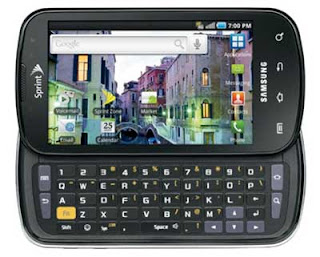
By the end of 2010, Google had moved beyond Froyo and was talking up Gingerbread, the 2.3 release. This release hasn't yet made it to the HTC Evo, which my wife now uses, nor to my Samsung Epic 4G, which I switched to in November of 2010. In fact, the Epic's meandering move from 2.1 to 2.2 was a big pain, but it was very much a laggard relative to its compatriots, and once it arrived, I had no complaints.

On the Android Tablet side, while Honeycomb (3.0) was said to be the go-to OS for Google-approved tablets, I've been quite happy with the Samsung Galaxy Tab, which came with 2.2 when I bought near the end of 2010. There hasn't been a clear roadmap from Samsung as to the Galaxy Tab getting to 2.3, let alone 3.0, but newer models of the Tab are centered around Honeycomb. So far, from my experience testing the Motorola Xoom, I haven't yet been tempted. The iPad 2's introduction in early 2011 was primarily a hardware bump for Apple, without new software features.

Mobile OS Hardware

As my conversion process to Android was ongoing, Apple started selling the iPhone 4 in June of 2010. Despite multiple visits to Apple Stores to try the device myself and reconsider if I had made the right choice, the hardware and software combo didn't persuade me to reverse course. Despite multiple rumors one way or another, Apple has not yet made any updates to the iPhone 4 in the past year, with the exception being adding a second carrier in the US (Verizon).

While Apple's been holding steady with iPhone 4, scads of Android phones from different carriers with different features have been released - some fantastic, some good and some not great at all. The Evo, despite many things I liked about it, was heavy and a power hog, and I felt odd writing a disclaimer each time I mentioned Android on the blog, so those things, combined with a simple upgrade to the Epic 4G, which gained me a hardware keyboard to boot, got me to switch. Besides phones with real keyboards (which Apple's not interested in), there are also dual screen Android phones, Android phones that offer laptop cradles and low-end Android phones that get below $99 at retail.

Where people have gained annoyance with Android is the tight leash carriers have over the software on the devices. It's perceived, even if not backed by great evidence, that the carriers are not incentivized to keep users on older hardware current, preferring instead to push them to new models. After starting and stopping its Nexus One program, Google introduced its Nexus S offering which, in addition to being a cool-looking phone, promises none of the carrier nonsense on the phone, as well as fastest access to Google code releases. While it's not a major win to say the attributes of the phone are simply avoiding negatives from carriers, it's valuable to have an unblemished alternative.

I Could Switch to Nexus S on Sprint If I Wanted

As a user, assuming money is available, the option is there to upgrade to an even newer and better phone on the Android platform, keeping the carrier you like (in my case, Sprint), every few months. If I found it made sense, or if they somehow give away Nexus S phones at Google I/O this year, I can switch phones again with almost no headache. Meanwhile, if I were still on Apple's side with the iPhone 4, I could stick with the iPhone 4 or stick with the iPhone 4. What most folks get confused about is the word "open", while I prefer to see it as "options". I can change if I want to something that works for me.

The 7-inch Galaxy Tab: Still the Gold Standard on Tablets

Speaking of "options", both the Samsung Galaxy Tab and the Android-powered Barnes and Noble NOOKColor come in 7 inch handheld sizes, which Apple thus far has avoided, sticking with their 10 inch model. While preferences are preferences, I do have the option on Android to go small, medium (8.9 inch) or large (10.1) if I want, while Apple is sticking with the one size fits all approach - one I expect they will change as the product matures. After all, they do have small/medium/large in laptops, iMacs and monitors, so it befits their history. I strongly prefer the 7 inch size over the 10 inch, and once you've used one for a good amount of time, a larger tablet just seems too big.

Applications

For those who prefer Apple and the iOS, aside from a unified experience, the second most attributed reason for keeping the iPhone candle lit is typically applications - either in number or quality. I hypothesized a year ago that Android's market share numbers and array of carriers, phones and users would lead to more developers, more applications and eventually better applications. I believe for the most part, this has come true. There are a select number of developers who continue to be iOS-only, but they are rapidly joined by those developing for both platforms, and increasingly, by those who are developing for Android first, iPhone and iPad second, like I said they would. Robert Scoble, well known tech blogger and Apple fan, cited this trend in his recent post this morning, when he said "the most interesting set of companies is being built around smartphones and here, for the first time, Apple’s iOS doesn’t have the coolest apps."

As a long-time Mac user (typing this on my MacBook Air now), I understand the defensiveness of quality over quantity and believing that you've got the best stuff. But I do believe that developers are bringing the best stuff over to Android as well and users are not going without apps they would have available on the other side.

There's no question there is tremendous work to be done to clarify payments to and rewards for developers on the Android platform, relative to the iOS platform, and there is work to be done on the Android Market to add discoverability versus iTunes, but again, having tried both, to say one is great and the other is lame is a dramatic oversimplification. There's something very cool about managing one's phones via the Web and installing applications to different devices from the browser with a few clicks - something I still can't do on iTunes.

What Does This All Mean?

It makes sense to try and keep an open mind when it comes to technology progress in a world that's changing fast. I've enjoyed iOS in the past, and am glad it's so simple that my kids don't waste much time on the iPads fighting technology. I've had my occasional bumps with Android, outweighed greatly by the benefits of multitasking, built in hotspotting, voice search, and flexibility of the platform. I actually tried and enjoyed the Windows Phone 7 experience, and hope to some day get a chance to try out HP's Web OS and Kinoma on any phone once that ships. To pick a side and stick to it while being blind to the many options out there in the market is silly, but in looking back on my switch, I am glad I didn't get stubborn and ignore the market trends. While Android has provided more options from different carriers with an array of devices and improvements in the user experience and applications, iOS has not done much in the same time, aside from make a ton of new customers and a ton of money. That's fantastic for Apple and for the tech world in general, but not much money has gone toward Apple from our home in the last year.

Google and the carriers have a lot of work to do to solve fragmentation and the perception of fragmentation. They have to do a much better job of explaining why their experience is better than that of the competition (if that's the case). They need to make Honeycomb dramatically more simple, and more attractive to developers. They need to make troubleshooting the devices, when things go wonky, solvable by humans without Linux backgrounds.

That said, I like that Android has given us choice in tablets, in smartphones and carriers. I like that I can use a platform that doesn't fill me with fear when I upgrade from one phone or another, or know that because my wife broke her Evo, that a new one which arrives tomorrow will take only minutes to configure, synched with her Google account. There's no telling what the next year brings in terms of new devices and new places we'll see Android, but I'm betting it will be another year filled with new functionality, new apps and new experiences I would have missed if I didn't jump from one side of the aisle to the other. No doubt tomorrow at Google I/O we'll start to get a few hints.

April 23, 2011

With iApps Surging, Apple Seemingly Abandons Web Apps

With iApps Surging, Apple Seemingly Abandons Web Apps

Considering the dramatic success of Apple's App Store for iPhone, iPod Touch and iPad, it seems remarkable that at the 2007 introduction of iPhone, the device was not set up for third party native applications, with Steve Jobs and crew suggesting standards-based Web apps were the way for developers to design for the device. A June 2007 press release gushed over secure and reliable apps designed on Web 2.0 Internet standards, but by July of 2008, the App Store launched as part of iTunes, and hundreds of thousands of apps have found their way to iDevices. Meanwhile, the Web Apps directory on the Apple Web site has atrophied, not having updated in nearly five months - while competitors such as Google push for Web app development inside Chrome.

The Web Apps directory on Apple.com looks much like the iTunes App store, Mac App Store or other application directory, including the Android Market, with "Most Recent", "Most Popular", "Alphabetical" and "Staff Picks" across many different categories, including "Games", "News", "Social Networking" and others. But if you look at the most recent content, you don't see anything new since December 3rd 2010, and Puck Billiards, posted on November 30th, has enjoyed the exclusive Staff Picks position for the entirety of the duration.

Puck Billiards Has Been Featured Since 11/30/10.

Prior to the directory's freeze, staff picks for Web apps were issued every few days. The staff picks page shows other highlighted apps posted November 18th, 29th, 30th, December 2nd and 3rd and then nothing. No mention of a change in status for the directory, or future plans. If you are a developer looking to submit a Web App, you can still do so, or provide feedback to the directory, but it's not completely clear anybody's listening.

Apple's Web Apps Page from a Previous Era Is Still Live

In contrast to the hundreds of thousands of apps on the App Store, Apple's Web Apps splash page mentions "over 1700 web apps to flick and scroll through", but this page too is clearly in the dustbin of history. The 1,700 number was live as of January 2009 (according to Archive.org), made even more antiquated with no mention of the iPad, referring only to iPhone and iPod touch.

iOS has been an incredible platform, an extremely lucrative one for Apple and its developer community. But the silence on Web apps makes it look as if they just walked away. The right thing to do would be to close submissions, shut down the page, and put up a note saying the directory won't be updated.

April 18, 2011

Sosumi: Apple vs. World for Phones, Tablets & the Future

Sosumi: Apple vs. World for Phones, Tablets & the Future

Apple is not taking the war on iOS lying down. Bleeding from the wounds of a thousand cuts courtesy of the knives from the wide-ranging Android ecosystem, the company is taking on Samsung in the courtroom, targeting the Galaxy series of phones and tablets, just over a year from their initial suit against HTC, months after they sued Amazon for their App Store naming and six months after they sued Motorola for their use of multitouch. It's getting a little busy in Cupertino's legal counsel these days, and without suing their current nemesis, Google, outright, Apple seems to be throwing their significant market weight around. Despite being outnumbered, there's no question they believe they have both might and right on their side.

An early flashpoint in the return of Steve Jobs to Apple was the agreed upon cessation of legal wrangling with Microsoft over the famous "look and feel" lawsuit that claimed Windows had borrowed heavily from the Macintosh. Of course it had. But it was legal, thanks to shoddy early contracts. In the announcement of the stopped legalities, Jobs famously said, "We have to let go of the notion that for Apple to win, Microsoft needs to lose.'"

The ensuing (no joke) 13-plus years have put Apple in the driver's seat versus Microsoft in may places - in market capitalization, and leadership on music players, mobile phones, tablets and sheer brand desire. Microsoft didn't lose, per se, but they didn't have to get the verdict handed down from the courts. The verdict has been handed down in the world of public opinion and choice of quality products that saw the Zune dismissed as a joke and Windows Media become an also-ran, with CEO Steve Ballmer being a lightning rod of futility.

But this time around, Apple is the front-runner. They have market muscle, they have clear differentiation and leadership in hardware and software. They have an amazing app store with high quality software - a combination that is practically unmatched, even as Android has passed Cupertino by in numbers, and quality improves rapidly. This time around, they are not being loose with their contract work, patenting everything under the sun - from the implemented to the theoretical, and they are backing up those patent claims by taking on their competition directly. They refuse to go down without a fight.


It took Apple to change the way the world interpreted smartphones. It took Apple to introduce a successful tablet. It took Apple to turn the tide against peer to peer free file sharing and to a legitimate music and video store. In the years following their leadership, iTunes has in some ways been lapped by Spotify and other offerings. Android's flexibility means there are many choices in handsets which look remarkably like the iPhone. The Galaxy Tab, my tablet of choice, comes in sizes the iPad doesn't. But the volley of lawsuits smacks of preemptive desperation, not from a company in trouble by any means, but by one that wants to make sure it won't ever be.

In March of 2010, former Sun CEO Jonathan Schwartz wrote a post, titled, in a nod to Jobs, "Good Artists Copy, Great Artists Steal". In the post, he claimed that Apple going after the competition raised their visibility and relevancy to the market.
"Having watched this movie play out many times, suing a competitor typically makes them more relevant, not less. Developers I know aren’t getting less interested in Google’s Android platform, they’re getting more interested – Apple’s actions are enhancing that interest."
I can't say that more users and developers are flocking to Android directly because of Apple's moves, but it is wearing down on the good will that Apple has fostered with the general tech community. In a world where Apple has forged its own path, going practically partner free, owning their own pace and great margins, the rest of the world has been expected to choose a side opposed to their own - be it Android, be it Samsung's BADA OS, be it Blackberry or Microsoft Windows Phone 7 (see Nokia). By choosing to compete with Apple and to develop solutions that mirror the iPhones of the past, it's left them open for such courtroom drama.


At this point, I probably have nearly as many Samsung devices in my home as Apple devices. From the Galaxy Tab to my Galaxy S powered Epic 4G phone on Sprint and our TVs, I'm looking at Samsung logos many hours a day. So this particular lawsuit doesn't exactly give me the fuzzy feeling that Apple is going to enable a great electronics manufacturer to provide solutions users want.

At my last startup company, the market incumbent sued us immediately following the acquisition of patents they had gained through buying a dying market pioneer. The intent of the suit, which was baseless, was to prevent us from raising a $47 million D round, and to thwart our momentum. The lawsuit was a major distraction for years, and damaged our ability to sell to customers, until it was dismissed years later. I've seen the big market leaders come after the challengers to try and protect their turf, and it has me wary. I can't defend copying and a lack of innovation, but I hope customers don't suffer as the Valley goes to court.

April 10, 2011

The Android and iOS War Is Not Mac vs Windows Part 2

The Android and iOS War Is Not Mac vs Windows Part 2


Over the last several months, I have seen scads of articles trying to equate the battle between Apple's iOS on one side and Google's Android on the other as a rerun of the famous Microsoft Windows versus Apple Macintosh battles that played out over the 1980s and early 1990s. In practically every case, Android is seen as Windows. After all, both operating systems have achieved market leadership (in most ways you could count leadership) through extensive partner relationships. In both cases, Apple fanatics look down on the alternative as being less polished. In both cases, the opposing non-Apple camp has the chance to revel in geekery, showing what's possible when you get to the system foundation, while looking down upon the more closed, possibly less flexible Apple option. But I would argue there's a different way to look at this conflict, and it comes down to apps - which flips the discussion on its head.

Microsoft Word 6 for Mac. The Pain Still Is Felt Everywhere.

As a longtime Mac OS user (and sufferer), I slogged my way through Apple's dark times in the mid to late 1990s, taunted by developers who would avoid Mac OS as a platform. Others, if they did choose to release for Mac OS, might do so well after comparable versions were issued for Windows. Often, the Mac version was a klutzy port of the Windows original, running slowly and awkwardly on Apple machines. While we had our own native apps that only ran on Mac, press and advertisers alike knew that Windows had the numbers - more users, more options and dramatically more software. Most of us Mac addicts were left to order out of catalogs instead of retail stores, quietly fixing our need like those with misunderstood fetishes, while Windows users gleefully got first-day shipments of PC titles with the latest games, office software, and multimedia. We begged for scraps, but our day eventually came.

In time, our once pitiful position, a mere blip in software sales next to the incumbent behemoth, changed. Under Steve Jobs' leadership the new Apple and Mac began to stand for something else - not just in quality, but in numbers. The popular titles that once were shipping Windows only started to ship for both Mac and Windows simultaneously. Large companies that once abandoned the Mac came back, or set up separate business units thad did a fantastic job creating quality software. The gap once felt in software has practically disappeared, and I can't remember the last time I felt longingly for a piece of software that ran exclusively on Windows, or found a hardware device that had forgotten to find a way to work well with Mac out of the box. I have an HP Laptop running Windows 7 (and IE) at home, but I've only had to use it to get into proprietary online meeting rooms that demand Windows. Otherwise, the notebook stays closed.

Does this mean that the Mac ever caught up in terms of the vast number of software titles? No. But no Mac user today feels the same way that we Mac users did eight or twelve years ago, because everything we can do on a PC, we can do on a Mac, and there are many different things possible on this platform that can't be done on Windows.

Top App Developers Are Coding for Android and iOS

This brings me back to Android. Apple's iOS has more applications than Android. It has a smart, well-organized, high quality store design that presents new and high quality apps to users for iPhone, iPod and iPad. The Android Market is close, but not perfect. iOS has a good number of applications that are iOS-only, which do not exist for Android, namely favorites like Instagram, Path, Flipboard and more - many more.

But, as I've predicted over the last nine or so months, since changing my mobile OS preferences, this is changing, just like the Mac issues of the past. The gap in software is closing in terms of the number of applications. The polish of Android is improving relative to that of iOS, as Google improves with each iterative release. The amount of software available is increasing to fill needs that were previously unserved. Soon Android users, if we have not gotten there already, will feel like the Mac users of today, where every need is served, and there is no lingering desire for anything on the other side of the mobile software divide.

You can see the dominoes begin to fall as iOS-only applications, like Path, publicly promise Android versions soon, while promising to wait and deliver an amazing experience. You see applications like Ninua start as Android only, and games developers deploy for Android while ignoring iOS. (See: Bionic Panda Games) I believe only the most ardent of iOS fanatics will stay single sourced in the long run, just like BBEdit has never strayed from its Mac-only approach (and boy do we love them for it).

For when it comes to the mobile applications piece of this skirmish, Apple is not Apple of the 1990s. It is playing a role more similar to that of Microsoft, who had more titles, more developers, and a seeming guise of invincibility. This is not a replay of that battle, but a new one where the challenger is now the dominant one, and behaving much like a dominant player would. What I like more about this specific discussion is that this time, in my opinion, both sides are great. I would take a market battle between Apple and Google any day over the frustrations and issues that took place with a dominant Windows of yesteryear. I still love my Mac and the iPad has transformed mobile computing. But let's not be so naive about the world of Android software. Developers, users and the entire Android ecosystem are going to be benefitting from continued progress and growth - in quality and quantity.

March 5, 2011

The iPad 2 Dilemma: Nice Upgrade But Without Risk

The iPad 2 Dilemma: Nice Upgrade But Without Risk

Apple is at its best when it takes giant leaps forward and risks its reputation on a new product or idea that could change the industry. Arguably its biggest successes in the last decade have been of this variety - from the original iPod and iPhone to the iTunes Music Store, the iPad and the MacBook Air, each of which is iconic, and unquestionably a success. At a time when competition is moving faster and more intelligently than ever before, we've all collectively come to expect the amazing from Apple from every announcement, and simple upgrades with anticipated features don't change the game. The iPad 2 delivered what we expected - faster processors, dual cameras, and a thinner body, great upgrades, but not really much of a stretch. Now we're in a waiting game again, about 9 months to a year from their next announcement (maybe), giving the competition a new target.

When the iPad was introduced in January of 2010, I said no other company could pull off what Apple had, adding "they are going to sell a ton of these machines, and you'll see them in places you never expected." Apple's sales numbers prove that to be true. They've sold excellently, and we've got a pair of them in our home (the original WiFi only version, purchased on day one). The company's focus on interesting markets, such as health care, and gaming, at the iPad 2 unveiling backed up the belief that the iPad would be in a new place for Apple, and the wide range of apps are extending this even further. So as Mac people, Apple people, we get spoiled.

Leaving aside personal preference for one OS or another right now, I've grown somewhat fatigued about iOS in general. Between my iPod Touch and two iPads, the design doesn't seem to have been dramatically upgraded since launch. A little faster here, a little multitasking there, some folders in another area, and the product incrementally proceeds. So too feels the upgrade from iPad (the original) to iPad 2. For existing iPad owners, like myself, the push to upgrade from version one to two is not a big one - unless you can get a sucker to buy the previous rev for a good price on eBay.

What we've come to expect Apple to do - not just the first time, but every time - is to take a big leap, and put themselves on the line for all mankind, with Steve Jobs, the immortal one (we would hope), playing the role of superhero. The floppy disk? Consider it slain. Proprietary networking? Dead. The optical drive? Rolling in the grave. Maybe the next step is to walk away from boxed software altogether? Maybe it's to do away with all wires? What I wouldn't give for a real device with true wireless power...

In the iPad 2, Apple didn't take any risks with the size of the product. No 7-inch model. No small/medium/large, with the exception being the amount of Flash memory and 3G option. And if you were blown away by SmartCovers, then I believe as an industry we're focused on the wrong things. As a long-time Mac viewer, I remember Steve Jobs introducing the Flower Power and Dalmation-colored iMacs, and the iPod Socks (for real) that could protect your iPod while simultaneously confirming you as a doofus.

As Apple pushes forward with the iPad 2, which we can safely say now will be both the volume leader and revenue leader in tablets for the foreseeable future, competitors from all corners, from HP to Blackberry to LG to Samsung to Motorola are preparing alternatives with platforms that quite possibly are more innovative than iOS today. The HP WebOS is worth peeking at. Honeycomb (Android 3.0) is compelling. The PlayBook remains to be seen, but maybe there's a niche out there for it.

I'm all for buying the latest and greatest stuff. It's fun and it's got serious geek bragging rights. If I didn't already have iPads, I would take a serious look at the iPad 2. But I believe I already have the very best product from Apple that is on the market today - the MacBook Air. The Air is a major reason I haven't fallen in love with the iPad. The light portability and thinness of the Air, plus a real keyboard and a real non-mobile OS. While Apple held serve with the iPad 2, it didn't take the risks that we love from Cupertino. It may have the app numbers now, but I can get practically all the apps I want on Android, and the aspects of that OS seem more comfortable and more designed for a cloud-centric era. If this is the Post-PC era, the OS has to be there too, not just the hardware. So Apple, great job, nice work, but I want more. Take a risk with us, so we can do the same with you.

January 31, 2011

Tablets Have Great Battery Life. Everyone Else? Not Really.

Tablets Have Great Battery Life. Everyone Else? Not Really.


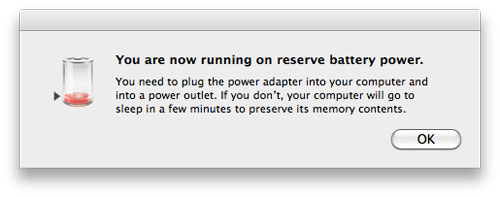
Despite my consistent begging for true wireless power (since 2007, at least), as ubiquitous as WiFi, only baby steps have been taken in the last few years to divorce us from our dependence on power cords to satiate our hungry electronic devices. As our devices become more capable, and we are seemingly constantly connected, incremental improvements in battery capabilities seem to be offset by parallel technology advancements, including faster, hotter, CPUs and features like multitasking, push notifications and real-time updates that drain the batteries of even my most advanced devices like a thousand pin-pricks to a taut water balloon.

There has become a dichotomy in my home between the power haves and the power have nots. Try as I may, my every trip requires careful planning of packing of power cords, overnight charging of some devices, and continuous charging of others, via adapters in my car's cigarette lighters or fruitful discovery of power outlets in restaurants, cafes, airport terminals and practically anywhere I can find them. To illustrate how obvious my issues are, one highlight of Christmas 2010 for me was my wife's purchase of a dual USB charger for the car, so I could charge both my phone and a tablet at the same time. Yes, it's that bad.

(Also on this topic: Charge Me Up: No Batteries Are Good Enough from June 2010 and line of site: Next Gen Batteries, where art thou?)

On the good side of power consumption, one finds obvious winners. The iPads go days without needing to be charged, assuming only infrequent use. The Barnes and Noble NOOKColor holds its charge for more than a week's time, if you are not reading every day. I've been absolutely comfortable taking Google's Chrome CR-48 notebook with me without packing my power cord, and can see eight hours of continual use before searching for a solution, and the Samsung Galaxy Tab, so long as its brightness is not at the highest position, simply needs to be charged each night, after a full day's work.

In contrast, I need only look up every few minutes at my MacBook Air's battery percentage to see the numbers slowly decrease. After a good two hours' effort, even without streaming music or Flash games, I'm well under fifty percent. And the pain in terms of battery life for my Android phone (the Epic 4G) is as bad, if not worse, than my experience with the HTC Evo, and before it, my iPhone 3G. Even with all sorts of work to turn off WiFi or GPS when unneeded, and using BlueTooth only in the car, the phone seems to live a mere four hours, whether I use it or not - and I'm not even getting close to mentioning talk time. At CES, I even bought an external battery extender, that supposedly gives a charge and a half, but it too seems to serve only to make my phone hot to the touch before both die.

The issues with keeping my phone up and running have become something of a laughingstock with friends who see the issues firsthand. Barak Hachamov, my partner at my6sense, sees my dance with electricity as we go meeting to meeting, and my wife knows I leave my phone plugged in at all times when I am not using it. There's no doubt I would probably make more phone calls on the device, if I wasn't constantly glaring at it sideways, or wondering why the battery seemed possessed. Trust me, I've been happy with Android from day one, and love it on my Galaxy Tab, but the Epic's great keyboard hasn't been enough to outweigh the battery problems and iffy GPS. It's enough to have me asking every Googler and non-Googler I know how well their own Nexus S devices are working, to see if I should stomach an early termination fee (ETF) and switch again.

(If you prefer iOS, note the same issues on iPhone from July 2009)

The gulf between what I see as fantastic power managers like the CR-48 and the tablets versus my other laptop and my mobile phone experience is mind-boggling. On one hand, you see things that seem to run forever, while on the other, things are feeling like they are going backward, teasing me into thinking I should just marry up a simple feature phone for calls with a plan-free Android device that lives on WiFi. But that's crazy talk.

At a panel in the first half of 2010, I was asked about what I thought would be hot markets to invest in, and I quickly mentioned two places - the first being teleportation, and the second being true wireless power. I stand by those demands. If Google can build self-driving robot cars, surely there's a department in the back finding a way to solve power consumption issues on Android phones, or finding unique ways to tap into static electricity, solar energy or something. Maybe I'd even accept a nuclear-powered laptop in exchange for going sterile. After all, with 3 kids under 3 already, I'm not exactly hurting for a full house.

Power cords are a menace to convenience. Crappy batteries are significant hindrances to us getting the full capabilities out of our laptops, tablets and mobile phones. From my experience, the tablet manufacturers are doing a great job, and the CR-48 is a fantastic first volley into the less-demanding laptop sector. But if there's any revolution I want to see in tech, it's this one. No more widgets and doodads until you solve this very basic thing for me - for all of us. Please.