Silicon Valley Technology Commentary & Archives · Est. 2006 3,045 Posts · 2006–2026

May 9, 2011

May 9, 2011 · 8 MIN READ · BY LOUIS GRAY

Revisiting Android A Year Into My Smartphone OS Migration

Revisiting Android A Year Into My Smartphone OS Migration

Tomorrow's Google IO approximately marks the one year anniversary of a shift in my digital lifestyle, when I began to use Android instead of my trustworthy iPhone, which had been my go-to device for a number of years. While any post I make regarding Android runs the risk of being assigned the 'fanboy' label, it's worth reviewing what has changed in the market over the year since I left the Moscone Center with a new HTC Evo - an intriguing year that's seen major announcements by players in and out of the ecosystem, with consumers reaping the benefits of an innovation race, assuming the courtroom battles between Apple and many other players don't throw a monkey wrench into the whole thing.

Mobile OS Software

When I left the Moscone Center with my new Evo (provided courtesy of Google and since replaced by a device I paid for out of my own pocket), the device came with stock Android 2.1, code named Eclair - with 2.2 Froyo having been demonstrated at the event and expected to arrive soon. At the time, my iPhone was on version 3.1.3 and the iPads were on iOS 3.2.

Not too long afterward, the Evo was gifted with 2.2 Froyo in an over the air (OTA) update, keeping it relatively on track with Google's calendar.

In late June of 2010, the iPhone was upgraded to iOS 4.0, bringing with it multitasking, folders and universal in boxes, to name a few things. The iPads reached 4.2 in late November, adding AirPlay and other items.

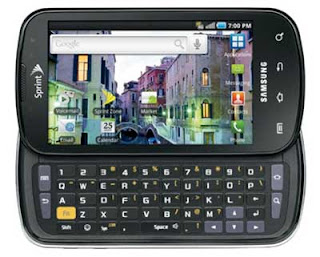
By the end of 2010, Google had moved beyond Froyo and was talking up Gingerbread, the 2.3 release. This release hasn't yet made it to the HTC Evo, which my wife now uses, nor to my Samsung Epic 4G, which I switched to in November of 2010. In fact, the Epic's meandering move from 2.1 to 2.2 was a big pain, but it was very much a laggard relative to its compatriots, and once it arrived, I had no complaints.
On the Android Tablet side, while Honeycomb (3.0) was said to be the go-to OS for Google-approved tablets, I've been quite happy with the Samsung Galaxy Tab, which came with 2.2 when I bought near the end of 2010. There hasn't been a clear roadmap from Samsung as to the Galaxy Tab getting to 2.3, let alone 3.0, but newer models of the Tab are centered around Honeycomb. So far, from my experience testing the Motorola Xoom, I haven't yet been tempted. The iPad 2's introduction in early 2011 was primarily a hardware bump for Apple, without new software features.

Mobile OS Hardware

As my conversion process to Android was ongoing, Apple started selling the iPhone 4 in June of 2010. Despite multiple visits to Apple Stores to try the device myself and reconsider if I had made the right choice, the hardware and software combo didn't persuade me to reverse course. Despite multiple rumors one way or another, Apple has not yet made any updates to the iPhone 4 in the past year, with the exception being adding a second carrier in the US (Verizon).

While Apple's been holding steady with iPhone 4, scads of Android phones from different carriers with different features have been released - some fantastic, some good and some not great at all. The Evo, despite many things I liked about it, was heavy and a power hog, and I felt odd writing a disclaimer each time I mentioned Android on the blog, so those things, combined with a simple upgrade to the Epic 4G, which gained me a hardware keyboard to boot, got me to switch. Besides phones with real keyboards (which Apple's not interested in), there are also dual screen Android phones, Android phones that offer laptop cradles and low-end Android phones that get below $99 at retail.

Where people have gained annoyance with Android is the tight leash carriers have over the software on the devices. It's perceived, even if not backed by great evidence, that the carriers are not incentivized to keep users on older hardware current, preferring instead to push them to new models. After starting and stopping its Nexus One program, Google introduced its Nexus S offering which, in addition to being a cool-looking phone, promises none of the carrier nonsense on the phone, as well as fastest access to Google code releases. While it's not a major win to say the attributes of the phone are simply avoiding negatives from carriers, it's valuable to have an unblemished alternative.

I Could Switch to Nexus S on Sprint If I Wanted

As a user, assuming money is available, the option is there to upgrade to an even newer and better phone on the Android platform, keeping the carrier you like (in my case, Sprint), every few months. If I found it made sense, or if they somehow give away Nexus S phones at Google I/O this year, I can switch phones again with almost no headache. Meanwhile, if I were still on Apple's side with the iPhone 4, I could stick with the iPhone 4 or stick with the iPhone 4. What most folks get confused about is the word "open", while I prefer to see it as "options". I can change if I want to something that works for me.
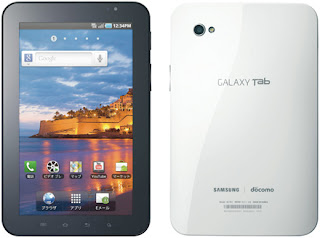
The 7-inch Galaxy Tab: Still the Gold Standard on Tablets

Speaking of "options", both the Samsung Galaxy Tab and the Android-powered Barnes and Noble NOOKColor come in 7 inch handheld sizes, which Apple thus far has avoided, sticking with their 10 inch model. While preferences are preferences, I do have the option on Android to go small, medium (8.9 inch) or large (10.1) if I want, while Apple is sticking with the one size fits all approach - one I expect they will change as the product matures. After all, they do have small/medium/large in laptops, iMacs and monitors, so it befits their history. I strongly prefer the 7 inch size over the 10 inch, and once you've used one for a good amount of time, a larger tablet just seems too big.

Applications

For those who prefer Apple and the iOS, aside from a unified experience, the second most attributed reason for keeping the iPhone candle lit is typically applications - either in number or quality. I hypothesized a year ago that Android's market share numbers and array of carriers, phones and users would lead to more developers, more applications and eventually better applications. I believe for the most part, this has come true. There are a select number of developers who continue to be iOS-only, but they are rapidly joined by those developing for both platforms, and increasingly, by those who are developing for Android first, iPhone and iPad second, like I said they would. Robert Scoble, well known tech blogger and Apple fan, cited this trend in his recent post this morning, when he said "the most interesting set of companies is being built around smartphones and here, for the first time, Apple’s iOS doesn’t have the coolest apps."

As a long-time Mac user (typing this on my MacBook Air now), I understand the defensiveness of quality over quantity and believing that you've got the best stuff. But I do believe that developers are bringing the best stuff over to Android as well and users are not going without apps they would have available on the other side.

There's no question there is tremendous work to be done to clarify payments to and rewards for developers on the Android platform, relative to the iOS platform, and there is work to be done on the Android Market to add discoverability versus iTunes, but again, having tried both, to say one is great and the other is lame is a dramatic oversimplification. There's something very cool about managing one's phones via the Web and installing applications to different devices from the browser with a few clicks - something I still can't do on iTunes.

What Does This All Mean?

It makes sense to try and keep an open mind when it comes to technology progress in a world that's changing fast. I've enjoyed iOS in the past, and am glad it's so simple that my kids don't waste much time on the iPads fighting technology. I've had my occasional bumps with Android, outweighed greatly by the benefits of multitasking, built in hotspotting, voice search, and flexibility of the platform. I actually tried and enjoyed the Windows Phone 7 experience, and hope to some day get a chance to try out HP's Web OS and Kinoma on any phone once that ships. To pick a side and stick to it while being blind to the many options out there in the market is silly, but in looking back on my switch, I am glad I didn't get stubborn and ignore the market trends. While Android has provided more options from different carriers with an array of devices and improvements in the user experience and applications, iOS has not done much in the same time, aside from make a ton of new customers and a ton of money. That's fantastic for Apple and for the tech world in general, but not much money has gone toward Apple from our home in the last year.

Google and the carriers have a lot of work to do to solve fragmentation and the perception of fragmentation. They have to do a much better job of explaining why their experience is better than that of the competition (if that's the case). They need to make Honeycomb dramatically more simple, and more attractive to developers. They need to make troubleshooting the devices, when things go wonky, solvable by humans without Linux backgrounds.

That said, I like that Android has given us choice in tablets, in smartphones and carriers. I like that I can use a platform that doesn't fill me with fear when I upgrade from one phone or another, or know that because my wife broke her Evo, that a new one which arrives tomorrow will take only minutes to configure, synched with her Google account. There's no telling what the next year brings in terms of new devices and new places we'll see Android, but I'm betting it will be another year filled with new functionality, new apps and new experiences I would have missed if I didn't jump from one side of the aisle to the other. No doubt tomorrow at Google I/O we'll start to get a few hints.
May 9, 2011 · 3 MIN READ · BY LOUIS GRAY

Google I/O 2011: Android and Chrome OS All the Time

Google I/O 2011: Android and Chrome OS All the Time


This week, Google is holding their annual developers conference on Tuesday and Wednesday in San Francisco. The event has grown in stature over the last few years, rivaling only MacWorld (back when Steve Jobs would keynote) in anticipation as press, users and evangelists banter back and forth about will or won't be announced at the event. For the second year in a row, I'll be there, after what was no doubt one of the more enjoyable technology events for me last year. But instead of going in expecting whiz-bang products and breath-taking surprises, I am expecting to hear strong updates on the company's continued march in hardware operating systems, both mobile and desktop, taking the company even further away from their initial core focus on search and accompanying ads, but not so extreme as to having us scratching our heads and demanding to find a use case.

Like the aforementioned Apple, Google already does a solid enough job year-round, between its biggest events, of keeping people updated. The Nexus One was announced at a special media event, as was the Honeycomb tablet OS. Google Buzz got its own event, all at the company's Mountain View headquarters where the venue was more comfortable, the expectations were maybe more muted, and the numbers were certainly smaller. But I/O is the crown jewel of conferences for the search and ads giant - a place to update its extended community of geeks on progress to date, while simultaneously encouraging them to help push their next initiatives forward, keeping their attention close while so many temptations lurk elsewhere.


The Sessions and Pods Heavy on Android & Chrome, Light on Social


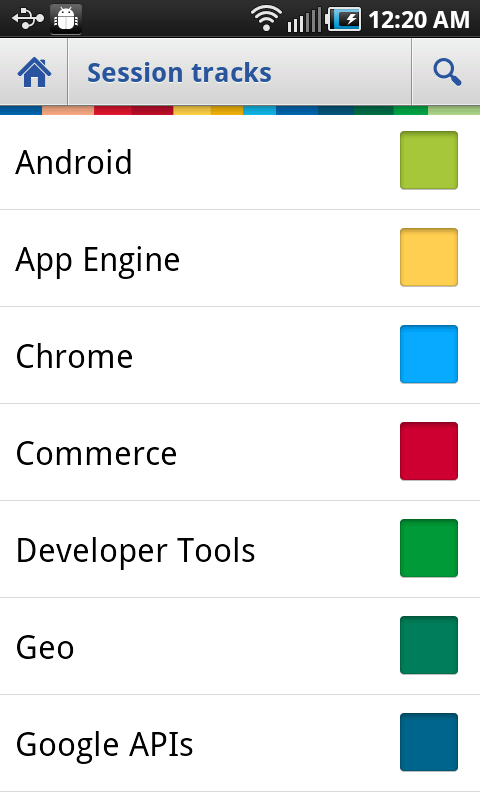
If the Google I/O application for Android is any indication of the week's focus, there are dedicated tracks for the company's two-pronged approach to take share in mobile and desktop OS's - Android and Chrome, flanked by items deeper in the weeds, like App Engine, Commerce, Geo, Developer Tools, APIs, Tech Talk and Google Apps.


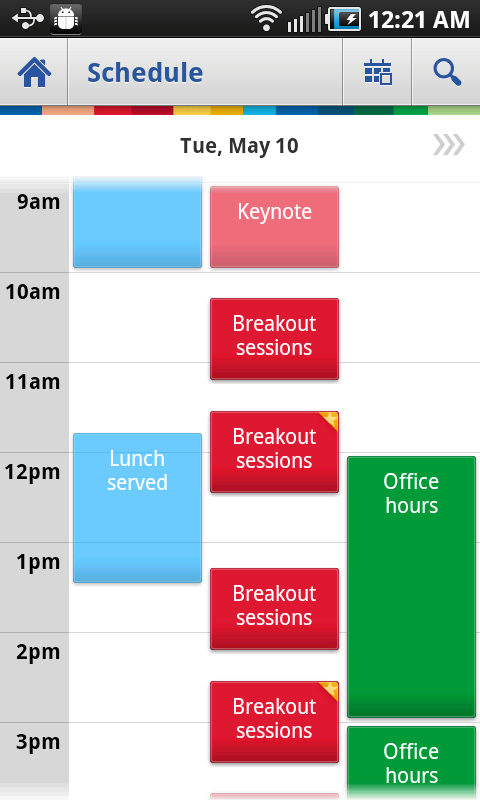
Tuesday's Schedule and My Tentative Attendance


The 2010 tracks make one either cringe or wax nostalgic with scads of updates on Google Wave, dedicated meetings to discuss Google Buzz APIs, and an entire track on the Social Web, from PubSubHubbub, Open and Social Web, OpenSocial, and the integration of Google Buzz with location and social gaming. Not in 2011. There's no Social Web track at all. Other sites have predicted what that means for the future of Google Social, but what it does mean is that one should plan on talking about something else outside of the two-part keynotes Tuesday and Wednesday.


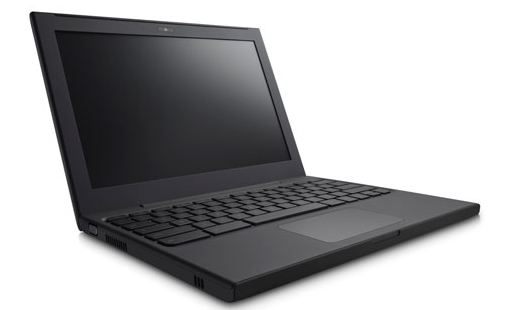
Google I/O 2010 was the flashpoint in my transition from iPhone to Android, after the latter OS had just been a curiosity to me. I've extended this Mountain View infiltration into my life with the addition of the Chrome OS powered CR-48, and spend a ton of time with my Samsung Galaxy Tab and Barnes and Noble NOOKColor, both of which run Android. In the fall of 2010, as I joined my6sense, we launched on Android, and have leveraged the Android ecosystem to find partners. 2011 looks like it should provide updates on Android helpful to both developers and users, and it may possibly be the starting point for getting Chrome OS equipment to the masses, beyond the initial beta units that I and others like me have been lugging around.

The combination of Android and Chrome OS should be enough for the event. No doubt we'll hear more about numbers, partnerships, coding, development, standards, openness and what have you. We may get more demos of music, but no announcements. We may see updates on the Android Market and Chrome Web Store, but they're ancillary to the main attractions one and two. No swing for the fences surprises, but straight up execution where the company knows its strengths and won't likely be second guessed. That can be saved for a special event when the time is right.

May 7, 2011

May 7, 2011 · 2 MIN READ · BY LOUIS GRAY

Quora Opens Doors to Self Promoters, Bias and Marketeers

Quora Opens Doors to Self Promoters, Bias and Marketeers

Quora's differentiation from more established but less respected question and answer forums has typically centered around the quality of the discussions and those participating. It's not too infrequent that one finds the perfect person situated to answer a question pops up in Quora to take on challenging queries, from how companies started, to strategy and history. But as the site's grown in visibility, attracting more a wider swatch of early adopters, including social media marketers, there has been something of a tug of war between those looking to keep the site pristine, lacking self-promotion, and those who are hoping to leverage the site as yet another outlet for branding and positioning.

On Thursday, Quora's Marc Bodnick, famous for leaving Elevation Partners, where he is a cofounder, to focus on the site after gaining addiction as a user, posted that users are "encouraged to contribute helpful content about topics where they have relevant personal experience", which deviated from one original mission of the site to prohibit content that was considered "primarily self-promotional." As he put it, the old rules were too restrictive, that the quality of the answer trumps the objective the answerer may have had for posting, and that users with direct knowledge are invited to contribute. The ban on self-promotion could have potentially led those with direct knowledge, but continued vested interest, to avoid participating.

Marc Bodnick's Announcement of the Policy Change

While the floodgates are now open for any brand to insert a representative to start answering questions directly or tangentially related to their products, Bodnick reiterated that disclosure of affiliations (and therefore potential bias) was still required, such as whether you work for the company, are an investor, an school alumnus, etc.

While there is some debate about Quora's ability to cross the chasm to more mainstream users, it's clear there is significant potential in a high quality alternative to today's collaborative knowledge bases, without the relative anonymity and dryness of Wikipedia. Meanwhile, many people are extremely bullish on the company, given its objectives and its founding from well-respected early Facebookers, Charlie Cheever and Adam D'Angelo. See Wired: Does Quora Really Have All the Answers? for one particularly recent effusive take.

As Twitter, Facebook and LinkedIn all crossed the chasm from early adopter plaything to mainstream acceptance, brand advocates and marketers followed. Similarly, Foursquare has gained tie-ins with marketers and advertisers, while other recent tech hits like Groupon and Zynga have always been all about the money. With Quora becoming a magnet for high quality discussions, and the shackles being taken off self-promoters and marketers, there's a chance that one person's insight could be seen as another person's spam. The good news is that with Quora, the community's upvote and downvote capabilities might be able to keep the sleaziest of the gladhanders away and let the quality float to the top.

If you've represented a brand and to date, Quora's ban on self-promotion had you slinging your wares elsewhere, the game is now afoot.

May 4, 2011

May 4, 2011 · 2 MIN READ · BY LOUIS GRAY

Twitter Launches @twittersuggests for Follow Recs

Twitter Launches @twittersuggests for Follow Recs

Twitter really wants you following more people. The company launched a full-on assault to users' mentions tonight with the unannounced introduction of a new account called @twittersuggests, which recommends people to follow by way of a dedicated tweet, just for you. This extends the service's preexisting features that have brought recommended connections, including "who to follow" and joint following and followed by lists when you browse new accounts.

As Twitter describes it, "@twittersuggests is an experimental feature that helps you find interesting new accounts to follow by tweeting Who To Follow suggestions, personalized just for you! This feature was created by Twitter, and it looks like a normal Twitter account – it will Tweet recommendations which you can reply to, retweet or mark as favorites."

One Example Of @TwitterSuggests At Work

It might look a bit like the famed Follow Friday phenomenon, but instead of being broadcast from one individual to their stream in hopes that others will follow your friends, this is targeted at a single user with names that may top the recommended list.

Twitter Suggests Has Posted Almost 100,000 Times Today

Given the vast amount of Twitter users on the network today, numbered in the millions, there's no way that @twittersuggests is guaranteed to give your account some love right away. As they mention, there's no way for you to opt into the experiment, but you can block @twittersuggests if the mention spam bugs you. They write the recommendations are being sent to "a small percentage of users, as an experiment."

Pankaj Describing the New Feature

The service was first described by Twitter's tech lead, Pankaj Gupta, who said, "It's a dead simple experiment with success uncertain, but I'm proud of it." Pankaj's bio says he is focused on user relevance, personalized recommendations and ranking. It's a hot topic these days.

Interestingly, the service name listed for the @twittersuggests account is called "Real Time Who To Follow". Clicking that link takes you to the description of the @twittersuggests help page. That's it. The incredible part? Twitter Suggests has already posted almost 100,000 tweets and new ones are going out every few seconds. Membership drive indeed. It's like the reply spam firehose has been unleashed. Watch and see if you get recommended to anyone. You're likely to hear people talking about this account quite a bit.