Silicon Valley Technology Commentary & Archives · Est. 2006 3,045 Posts · 2006–2026

December 31, 2010

December 31, 2010 · 4 MIN READ · BY LOUIS GRAY

2010 Internal Year In Review (Month by Month)

2010 Internal Year In Review (Month by Month)

With almost 400 posts in the year, you no doubt missed some, and January probably seems like ancient history. That's why at the end of each year, I try to summarize the 12 months that just went by on the blog to see if we all can remember the big news and opinion that passed through this place. Interspersed with the day by day updates, the product launches and feature enhancements, I did manage to expand the family and the house and get more embedded in Web startup land with a new role.

Maybe I blogged about all these changes and maybe I didn't. 2010 saw a resurgence in tech startups after a poor economy shelved many ideas in 2008 and 2009, leading some to even claim there was a bubble. To be honest, I don't think there is one, but a few late stage companies that deserve it got funded at big levels. Now let's make sure to recap.

Reviews for the year 2009 and the year 2008 are of course available for those of you who just stopped by this year.

The word of 2008 was "launched". The word of 2009 was "Twitter". The word of 2010 was probably "Android".

January

I started the year saying computing would get thinner, mobile and connected... noted Apple tablet reruns... discussed iPhone owners first considering Android... begged for OS neutral data... checked Technorati's pulse... got a MacBook Air... said the iPad would sell like crazy... and said you should be driven and never compromise.

February

February reported on Apple's growing chip division... saw Siri launch for artificial intelligence... the introduction of Google Buzz... which validated FriendFeed... based on open standards. Cadmus launched for Twitter relevance... and BuzzGain was acquired by Meltwater.

March

In March, TiVo launched the Premiere line of DVRs... SocialToo protected against Twitter phishing attacks... Google Reader hit Play... while Blogger added templates... and Twitter's Ev Williams bombed in a SXSW interview. Qwotebook launched... my6sense launched an Attention API... and my wife and I announced we were pregnant with baby #3.

April

In April, I belatedly started using Foursquare... I was annoyed with my iPad... but noted confusion from developers in terms of focus... Rick Klau left Blogger to head Google Profiles... I joined the MyLikes advisory board... Twazzup launched a Twitter client... Fabulis launched... Steve Jobs became an e-mail machine, and Facebook started pushing "Like" activity to third parties.

May

I mocked Apple's focus on Flash when AT&T was a bigger enemy... Scout Labs was acquired by Lithium... I expanded use of Google Buzz... I grew tired of the echo chamber and attacks and attended Google IO, which saw the introduction of the Chrome Web store... the Google Buzz API... Google TV and argued iPhone users were in for it. I tested Android for the first time... and said mobile choices came down to your focus.

June

By June I reported Android was pretty good and hit 5,000 tweets. Spotify went social... I joined Qwotebook's advisory board... fell in love with Redfin... tried to be pragmatic... heard rumors of Google Me... and saw Brizzly roll out picnics.

July

July saw Blogger add stats, my kids take to the iPads... a call for data independence... I goofed up and thought Foursquare would buy Brizzly... saw Kosmix introduce a cool Twitter extension... I officially switched to Android... saw the launch of Flpboard and Friendly for iPad... and moved across town where I suffered without broadband for a week.

August

August saw me misinterpret internal Twitter accounts as new features.... I had some dingbat fraudulently use my identity... the storage world got hot with acquisition mania... I announced joining my6sense... and Braden was born the next day.

September

In September, Spotify and Sonos teamed up... while I predicted the future of search... my6sense came to Android... people debated the future of RSS, again... and Google Me rumors had us investigating social layers or networks. By end of month, OneTrueFan launched... and AOL purchased Brizzly.

October

By October, I got the new Apple TV... Tweetbeat launched for real-time Twitter events... Yobongo launched for location chat... Marissa Mayer was moved to location... the attention crisis accelerated... I visited the new Google campus store... and rumors about Apple looking to buy Spotify were false.

November

In November, Lazyfeed launched Lazyscope... and Sonos sent me a wireless iPod dock... I predicted the third wave of the Web would be personal... Blekko and Rockmelt launched... I switched to the Samsung Epic... as did Path... and Hotpot... while Cliqset shut down... and new iPad competition from Android emerged.

December

As the year wrapped, Google Reader came to Android... while Facebook expanded friend discovery... I was featured on CNN to discuss privacy, which led to phone calls... Gawker's database was compromised... and Delicious looked to be dying. I bought the NOOKColor... saw the launch of Beluga... argued iPhone fans were discounting Android... summarized Quora's growth... got hooked on the Samsung Galaxy Tab and tried out Google's Chrome OS laptop, the CR-48.

So that was our year. Launches, new gadgets and new operating systems galore. Discussion of openness and data portability, success and failure. If you've just bumped into the blog, now you'll get a solid idea of what we do here. Even with all these links, the hardest part was making sure I caught all the big stuff. On to 2011.
December 31, 2010 · 4 MIN READ · BY LOUIS GRAY

Batting .400 For My 2010 Predictions in the Tech World

Batting .400 For My 2010 Predictions in the Tech World

At the end of each year, it has been something of a tradition to make wild predictions that few others are making, and then mock myself for those I got wrong. This year should be no different. At the end of 2009, I made concrete predictions for the world of tech, which assumed a strong IPO market, increased acquisitions and some specifics from the big players, including Apple and Google. As usual, I got some right, and others wrong. Let's see how I fared.

History: Predictions for 2010, 2009 and 2008. Results for 2009 and 2008.

1. Twitter Manages to Complete 2010 With No Major Hacking or Security Incidents

Right. After a shaky start to the company's life in terms of both scale and security, Twitter really held its own in 2010. They didn't get hacked and for the most part, they stayed up. There were no large-scale hacking incidents for major users and no strategy docs leaked to TechCrunch. It's the little things.

2. Seeing Android and iPhone, Windows Mobile Will Aim for Parity, and Fail

Right. Fail is a strong word, so maybe I'm presumptuous here. But Windows Phone 7 is absolutely an approach to take on Android and iPhone, and early reports haven't been great in terms of sales. Given the late launch of the product, I would have to take more of a wait and see attitude to see the final result, but thus far, it'd be a stretch to see them in a strong #3 role in the smartphone race.

3. Apple Will End Exclusivity With AT&T, Adding T-Mobile and Verizon

Wrong. Another year went by with AT&T acting as Apple's boat anchor. Rumors again are flaring up around Verizon, but not in time for 2010 to be counted.

4. Facebook Will Announce a Migration Plan for FriendFeed Users

Wrong. FriendFeed is still there, just as it always was, with a dedicated community, not going anywhere. Facebook keeps it alive even though many of the acquired FriendFeed team have since left.

5. Google Wave Will Exit 2010 Still In Beta

Wrong. I expected Google Wave to not be ready enough to consider a solid product, but I certainly didn't anticipate the product being axed outright. Even by Google's standards, that was a very short-lived product.

6. Facebook, Zynga, LinkedIn Will All Go Public

Wrong. Not even close. One thing I hadn't anticipated relative to historic activity was the strong role played by Russia's DST, who has made hundreds of millions of dollars available to late-stage companies like Facebook, Zynga and others. The increased demands of going public at a time when rewards for late stage investment are so high has reduced the need to go public early in a company's life cycle.

7. Chrome OS Netbooks Will Be Available from Major Retailers

Wrong. I may have a Chrome OS Notebook, but it came straight from Google in an early trial. It's too early for this product to be sitting at Best Buy or Fry's, but maybe this changes next year some time.

8. Many Social Media Experts Will Launch Mediocre Agencies

Right. I am sure this is true and don't even have to go back it up. :) Even in looking at some of the lesser-read tech blogs that infiltrate my Google Reader, I can see a lot of folks took side jobs as independent consultants focused on social media, and it doesn't seem they are all that differentiated. Feedback from companies I have worked with in various roles indicates they are pitched often by SMEs with sleazy tactics.

9. Google, Facebook and Apple Will All Make $1B+ Acquisitions

Wrong. Not that it was Google's fault of course. The company made very visible overtures to Groupon and allegedly to Twitter as well, with no success. Facebook remains cheap, while Apple did its spending on Quattro Wireless and Siri early in the year, at prices less than a billion bucks.

10. The Real-Time Search Market Will Consolidate

Right. Very much so. OneRiot got out of the real-time search game altogether and launched an ad network. Twazzup's founders launched a Twitter client and later the Facebook iPad app Friendly instead of focusing on search. Collecta and Topsy are still out there, but I would venture a guess that most users will just turn to Twitter and Google for real-time search instead of going to the lesser-known startups.

Total score? 4 out of 10, just about where I usually bat, not because I am a bad guesser, but because I don't like guessing the obvious and would rather have some fun with each year's predictions. In 2009's predictions, I scored 4 1/2, and only 1 1/2 for 2008. Maybe I'll break 50% next year and maybe not.
December 31, 2010 · 7 MIN READ · BY LOUIS GRAY

The Top 15 Stories on LouisGray.com in 2010

The Top 15 Stories on LouisGray.com in 2010


With almost 400 stories in 2010 posted on the blog, some definitely rose higher than others in prominence, due to breaking news, interesting insight or simply sharing my personal experience, as my view on the technology landscape changed, as did my preferences. While total posts on the site were down almost 30 percent year over year, thanks to the addition of baby #3, a new job that sees phone calls as likely at midnight as any other time, and greater filters on my side, to avoid feeding the echo chamber of repetitive tech bloggers, there are a number which gained more traction than any other. From a quick visit to Google Analytics, it seems my move from iPhone to Android gained the most attention, by far, as did discussion of Apple, Google, Facebook and social media strategies.

To see last year's results, catch: The Top 15 Stories on LouisGray.com in 2009

The Top 15 stories authored in 2010, in order of highest traffic to least:

1. Why I Turned In My iPhone and Went Android
July 10, 2010

Despite this being far and away the biggest story on the site in 2010, I didn't expect that to be the case, nor did I do anything useful to hype it. Having made the choice to go Android, turning in my iPhone earlier in the week, I felt it made sense to explain my choice. About 20 minutes to midnight on a Saturday, when nobody should be reading tech blogs, I summarized my thoughts. Robert Scoble, an hour or so later, said he couldn't kick the Apple iPhone habit. Bizarrely the post hit Techmeme and for much of Sunday, was the 2nd biggest story on the Tech Web. I was inundated with comments from Apple fans telling me I was a fool.

But that wasn't the end of it. John Gruber of Daring Fireball linked to the story on Monday, and said the piece was "thoughtful" but assumed Android would eventually be better than iOS, not that it is now. That kept traffic flowing, and I honestly couldn't read every comment as it hit my e-mail. I moved them all to archives, and later caught up.

2. While Apple Slept On Their Hobby, Google Executed
May 20, 2010

Second in the Apple vs Google discussion was a recap I made of the Google TV unveiling at Google IO. Since the post, Apple TV reloaded with a new stream-oriented box, and Google TV has had a slow start, but at the time, Google seemed to be making a lot more headway and noise about its product while Apple had been remarkably silent.

3. iPhone 4 Is Nice, But It's Not Enough to Slow Android
June 7, 2010

A clear tilt in my thinking of iPhone vs Android before I made the full switch, I looked closely at the iPhone 4 unveiling, with some glimmer of hope that Steve Jobs and team would do such a grand invention that I'd be a fool to switch sides. Unfortunately, the iPhone 4 looked very nice - the best Apple had ever done - but it was hardly revolutionary. Combined with the market forces behind Android, it seemed clear to me where momentum was headed.

4. 50 Startups Worth Watching
June 9, 2010

Showcasing Symbaloo, a Paladin client, I organized my thoughts on 50 top startups mid-way through the year that I was watching. Foursquare and Spotify topped the list, with others, like Blippy and Quora also featuring prominently. Interestingly, I had posted my6sense at #14 overall, more than two months before taking a fulltime role with the company in late August.

5. How to Bring Your Google Buzz Entries to Twitter
February 11, 2010

With Google Buzz just having launched under much visibility, many folks wanted to make their Buzz posts synchronize with other services. The addition of Google2Twitter made it simple.

6. Unfriending, Unfollowing, Unsubscribing... Less Is More
November 29, 2010

The multitude of connections we all have in our many social networks can at times become overwhelming. In the interest of getting more signal and less noise, I dramatically reduced the number of connections I had on both Facebook and Twitter, and even started trimming Google Reader feeds.

7. iPhone Armageddon: A Week With Android & EVO
June 1, 2010

Having gained the HTC Evo from Google IO, I opted to give the device a fair shake, rather than be dismissive of it, as I had anticipated I would. What I found was surprisingly good, and led to my eventual switch to Android, helped by the minor upgrades of iPhone 4.

8. Why I am Using Google Buzz as An Alternative to Facebook
May 8, 2010

While Google Buzz has been slammed by a number of tech sites for the gulf of what it delivered against their overhyped expectations, I found the site very useful, bringing the aggregation I always liked of FriendFeed to a new place. I outlined how I could use Buzz as an alternative to Facebook.

9. Should Social Profiles Live On When People Die?
July 3, 2010

One of the creepier things about Facebook was my often seeing the site request I reconnect with people who had passed on. Clearly, they hadn't updated their profile in some time, but the catch was they couldn't. Michael McKean, my example, had died due to leukemia and would never post a status update again. But Facebook suggested we talk more. Algorithm fail.

10. Facebook Starts Mandatory Profile Linkage to Public Pages
April 29, 2010

Facebook underwent many different updates to one's profile during the year. In April, those things you liked couldn't just sit as text on your profile, but were automatically connected to public fan pages of those items, be they bands, brands or products. It seemed a little pushy to me, and something that benefited the network moreso than its users.

11. Author: Zuckerberg has "Total Control" over Facebook
June 23, 2010

Speaking of Facebook (3 in a row!), after I attended a presentation from The Facebook Effect's author, David Kirkpatrick, I highlighted his comments, which said Mark Zuckerberg had "total control" over the site. This key quote was enough to gain the interest of Huffington Post's Technology section, who linked it up and drew a good amount of traffic.

12. Friendly: The Best Facebook Experience for iPad
July 24, 2010

One of the biggest successes on the iTunes store for iPad apps was Friendly. Friendly replicated the Facebook experience on the big screen, and in the absence of Facebook having an official iPad application, the company's developers had a gold mine on their hands. I knew it was a big deal and was first to write about it. It's leading the pack more than five months later.

13. The Third Wave of the Web Will Be Uniquely Personal
November 7, 2010

Working at my6sense, I think a lot about personalization and prioritization of content, so the best things come to you as an individual, not as a demographic. The more I thought about it, the more it seemed we were on the cusp of a big wave - one toward personalization, following on the founding of the Web to share information and the ongoing movement toward social. Shortly after my post, stories written by founders at Gravity and Trapit, both posted on TechCrunch, echoed my views.

14. New Apple TV Extends Fragmentation, Cupertino Style
October 1, 2010

Once the new Apple TV came into our home, I was excited to see what it could deliver, but soon found myself wanting, as the channel lineup on the device was dramatically reduced from its predecessor. With a focus on streaming, Apple was unable to sign enough deals that made the entertainment options on the product similar to what one could expect. This kind of fragmentation was annoying, and reminded me of the many similar complaints that critics would through at Android and its array of devices.

15. We Apple Fans Are In Mac Tablet Rumors Reruns
January 2, 2010

If 2010 was all about tablets, and specifically the iPad, we were already buzzing about it by January. For this longtime Mac fan, it seemed like deja vu all over again. Unlike year after year of previous rumors, however, this one came true.

I would like to say that 2010 was the fifth year in a row with more than 500 posts, but it wasn't. Every day I go without posting I feel guilty, but it is just as important for me to drive quality through the site and share with you what I'm thinking, sitting in an interesting intersection of the Web, from the big tech giants and the smallest startups. Already curious what the top 15 stories of 2011 will be.
December 31, 2010 · 4 MIN READ · BY LOUIS GRAY

The ChromeOS CR-48 Experience: Fast, Promising, Early

The ChromeOS CR-48 Experience: Fast, Promising, Early


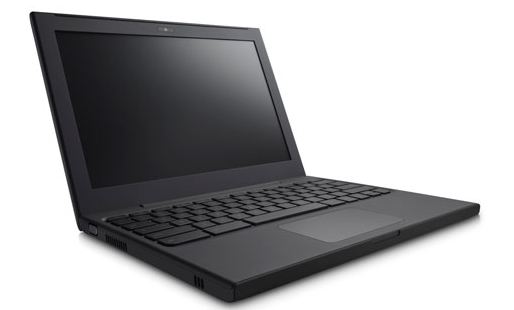
While the tech elite gained notifications early in the month that their Google ChromeOS-powered CR-48 notebooks were on their way, and thousands of others flocked to submit their names to become one of the lucky chosen 60,000 few to get access to what could be the first version of the next big operating system, my e-mail box remained empty. I must have groused about it enough that my wife finally took to her blog to lodge complaint with Google (somewhat tongue in cheek). Come Christmas morning, the last surprise for me was that she had subsequently conspired with some well-thinking Google staffers to make the device available for the holiday (along with some fun Android figurines). While I had to scowl at her end-run which delayed my access to the notebook, I finally put my ego aside and have been using the CR-48 intermittently for about a week, and have found it to be filled with intriguing promise, even if this is clearly not the final package.

The major hypothesis of the ChromeOS plan is that the future is the Web. Web sites, Web services and Web applications. As such, the main differentiation between the ChromeOS powered notebook and that of more traditional laptops running Windows or Mac is that there is very little of the desktop metaphor, with a local hard drive to save all of your documents and run your software applications. Running ChromeOS is much like a terminal that only runs the Web browser. Like the Hotel California, you can try to quit the app, but you can never truly leave.

First impressions with the Chrome OS are very smart. After taking a photo with the bulit-in Webcam to take your profile photo and finding the nearest WiFi point, you connect with your Google ID, and the service pulls in bookmarks you may have synchronized across your Chrome browser. If you are a person who lives on the Web, you're practically set. Theoretically, all your e-mail, your social networks, your favorite Web sites, and even your documents (if you use Google Docs) are right there. What more could you possibly want?

The hardware, the less revolutionary but still nice to have, half of the equation, is extremely minimalist. Black all the way around. Quiet. Very quiet. It wakes up quickly from having the screen closed, and is quite smooth. After years of seeing my keyboard YELL AT ME with letters in full caps, the Google CR-48 is soothingly lower case. Even the CAPS LOCK key is gone, replaced with a search button - not that I found myself using that any more than just typing a word in the browser bar and hitting return if I truly wanted something. The trackpad is not the best in the world, but you can get used to it.

For someone raised in the desktop metaphor with applications, the feeling that I can't get out of the browser and "get to my files" is a bit disconcerting and takes some rethinking. Jokingly, I saw it as if a person had been placed on house arrest. Sure, you can still watch TV and get food from the fridge, and maybe even have visitors over, but you can't do anything outside beyond looking out the window. The lock-in seemed forced, even if I understood why. It's something of the nature where it's assumed Google knows best for me, even if the user is left wondering if its their own best interests that are being served, or that of the company.

At the early stage of ChromeOS's life, it's tempting to list those things you can't really do. You have a Webcam, but it doesn't work to take photos for some Web services, as neither Brizzly and Facebook could recognize it, while Gmail's built in video chat could. You can download Zip files from e-mail attachments, but not unpack them. Taking screenshots looks like an impossibility.

That brings us to the Chrome Web store, the accepted place to run applications in the browser. Nicely laid out, reminiscent of iTunes, there's a great number of options there, but it's early days, so for every well thought out app, there are others that just serve as shortcuts to existing services, or lower-quality apps. Believers will have to be patient as the iTunes Store was not a huge winner back in 2003 either, and it will take time for developers to learn how to code for Chrome OS.

Included with the CR-48 notebook is embedded 3G wireless from Verizon, which makes the device very appealing for mobile computing. In the interest of not adding another 3G bill beyond that from my two Samsung Sprint devices, I did not enable this, but obviously could see the value.

Like many of Google's products, the device and the underlying OS is very useful from day one. It's clean. It's fast. Its battery is very good and the compatibility of practically all sites and services on the OS is very good. But also like other Google products, to fully adopt the direction takes something of faith, that improvements and compatibility with more hardware and more flexibility is on its way.

To have consumers purchase Chrome OS laptops, once they hit the market, serious efforts will need to be taken to convince people why putting everything in the cloud, and abandoning (for the most part) applications they know well, will help their lives. It's not just enough to built an intriguing device, but to also successfully sell the story around the device. For the thousands of brave souls who have access to the CR-48, getting the new laptop is fun, but also free. In parallel, we will need to see growth in applications and services to take advantage of ChromeOS, to ensure confidence we can close down our Macs and our Windows machines and go completely Google.