Editor's Note: Part three in an irregular series of stories from my 12 years in Silicon Valley. The first discussed
interviewing for my first job, while the second
discussed the role.
 Finishing School While Starting My Career
In early 1999, I was simply punching the clock at
Berkeley, wrapping up my final semester before graduation, taking the minimum units needed to complete my double major. Most days, I would show up arguably as the best dressed guy in classes, wearing button down shirts and often slacks, preparing for my Valley job instead of the more laid-back style of my classmates, whose tastes were quite varied. For the most part, my classes were in the morning. Following their drudgery, I'd drive down 101 and reach Burlingame.
If lucky enough to get there in time for lunch, I'd drop off my bag and leave immediately with my colleague before doing a lick of work. If we timed it right, we could even go hit a bucket or two of golf balls at the local driving range and quickly grab a sandwich before returning to the office, still making it to our desks in time before our boss came in, having seen closing bell on
CNBC. Some days we made up for it by working late into the evening and letting traffic settle, but other days, we didn't get much done at all.
Even in a time when other companies were seemingly filing to go public with no revenue, our particular lack of direction couldn't last long, and it didn't.
A No Revenue Company Doesn't Exactly Scale WellAbout six months after joining the project, it was clear the company's lead investor was fatiguing from the lack of traction seen in our SEO product, and grew tired of being told, often loudly in Russian during more heated arguments, that he didn't share the same vision. After one flareup, one of his partners was assigned to work closely with us to get an idea of our tasks and goals to see if the company could be made valuable, and thus, the investment saved.
Even the partner seemed uncertain about what he was supposed to do. He had a hard time reconciling what the company said it did with what my colleague and I spent the most time doing - including our site rankings, IPO market predictions and the occasional interview with an industry luminary, like one I did with Scott Gannon, the
then director of ecommerce at IBM. He seemed impressed with how we had managed to accomplish much in an odd work environment, and confided one saving grace for us both was that "we were cheap", which we knew.
The situation was coming to a head, but it wasn't exactly clear just what would be the result.
"You Two Are Laid Off. I am Fired."By late April 1999, I came into the office one day and the bad news had come. My boss sat me down and said the lead investor had chosen to withdraw his money after all, and no additional funding was in sight. As a courtesy, my colleague and I would have two weeks to wind things down and then we would be done. I was told that it was through no fault of our own, that the mistakes were his, effectively adding that while we were laid off, he had been fired.
This was obviously disconcerting. I had enjoyed the work we had done, and liked being part of the Valley. But given our lack of traction, I was not surprised. My colleague and I surely took a longer lunch than usual that day, though I can't remember exactly what happened.
The next day, the first in my two weeks of continuing to wrap things up, I was standing by the office printer, and an employee from our sister company said there was somebody he would like me to meet who was going to join them soon and that it was especially important I come in the next day. The new hire, a VP of Marketing, had apparently heard I had done some successful things even though our venture had practically flat-lined. This was an interesting turn.
The following morning, I was introduced to the new VP and in our discussions found we had a shared interest in many things including the future of communications, a shared love for all things Apple, and with my graduation from Cal looming, he was eager to start his new job with someone already on board. In the space of 48 hours, I had gone from facing unemployment to quite possibly starting a new job before the last one was up, simultaneously drawing two paychecks.
The American Dream: Watching Your Boss Pack Up and Leave?Having agreed to start my first role as a Web Marketing Manager for "
Technology Workshop", a poorly named but well-intended motley crew of Russians looking to change the world of Web communication, the job transformation was indeed an odd one. Joining the sister company meant that I hardly had to change a thing. My desk stayed the same. My computer stayed the same. Even my email address and phone number stayed the same, while who I worked for shifted. Over the ensuing months, of course, I had to take calls about the last role, and they eventually stopped.
One day in my first full week of work at Technology Workshop, Greg (my old boss) came back into the office with boxes. While I tried to face my computer monitor and keep working, I couldn't help but notice as he took down his things, his books, notepads and other items and packed up to leave. There was little joy in it as his dream had been stopped. But there was some real awkwardness as the junior employee stuck around only to see his boss, boxes in hand, turn to shake hands for one last time. After some muffled goodbyes to some of my other new colleagues at the new company, he was gone.
My new job had started. Same desk. Same phone. Same e-mail address. Same office. New project.
 With the horrific earthquake in Japan destroying lives and devastating communications lines, trying to connect survivors of the disaster was nearly impossible Friday and into Saturday with phone lines down and SMS unavailable throughout much of the country. One man, stranded 10 miles from home, found a way to connect with his wife, 8 months pregnant, using Beluga, the group texting application launched at the end of 2010, recently acquired by Facebook.
 On Friday, I participated in a panel at SXSW discussing the rising world of mobile photo sharing, specifically addressing two approaches - mass broadcast of photos through sites like
 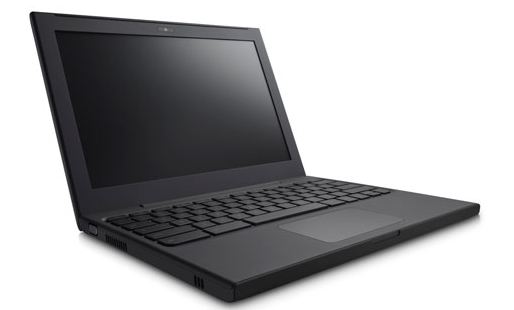 Here in Austin for SXSW for my third time at the conference, one thing has already been achieved which I never attempted before - a completely Apple free experience. After some thought, I opted to join this year's conference while leaving my MacBook Air at home, in its place taking the ChromeOS powered CR-48 notebook from Google's pilot program instead - not due to some ill will toward Cupertino, but as the device helps solve some of the major issues that plague industry events of this type - network access and power. Seeing my fellow Apple addicts clustered around power outlets with white cords draped to and fro today has already helped validate that decision. Meanwhile, Google has quietly been upgrading the ChromeOS experience, so we early beta testers can feel more confident using what's not intended to be the final user experience.